Uptempo is a B2B SaaS platform for centralized enterprise marketing operations, planning, budgeting, execution, and measurement.
This case showcases how a pragmatic, strategic product design approach untangled legacy architectural constraints, aligned cross-functional stakeholders without formal authority, and restored critical administrative capabilities to secure high-value enterprise accounts. While the final screens highlight our production UI, the true value of this initiative lies in the strategic UX architecture, AI-Integration into our workflow, and cross-functional leadership executed behind the scenes to deliver those results.
Case Metadata
Role: Senior Product UX Designer (with cross-functional PO responsibilities & Interim PM execution)
Scope: Enterprise B2B SaaS Platform (dealing with a Post-merger integration of BrandMaker, Allocadia, and Hive9)
Core Challenge: Post-merger platform consolidation, feature parity gaps, administrative architecture alignment, and customer retention urgency.
Skills & Core Competencies: Lateral Leadership, Pragmatic MVP Scoping, AI-Native Product Discovery, Enterprise Governance, Participative Co-Design & Cross-Functional Collaboration.
1. Post-Merger Integration: High Stakes & Architectural Unification
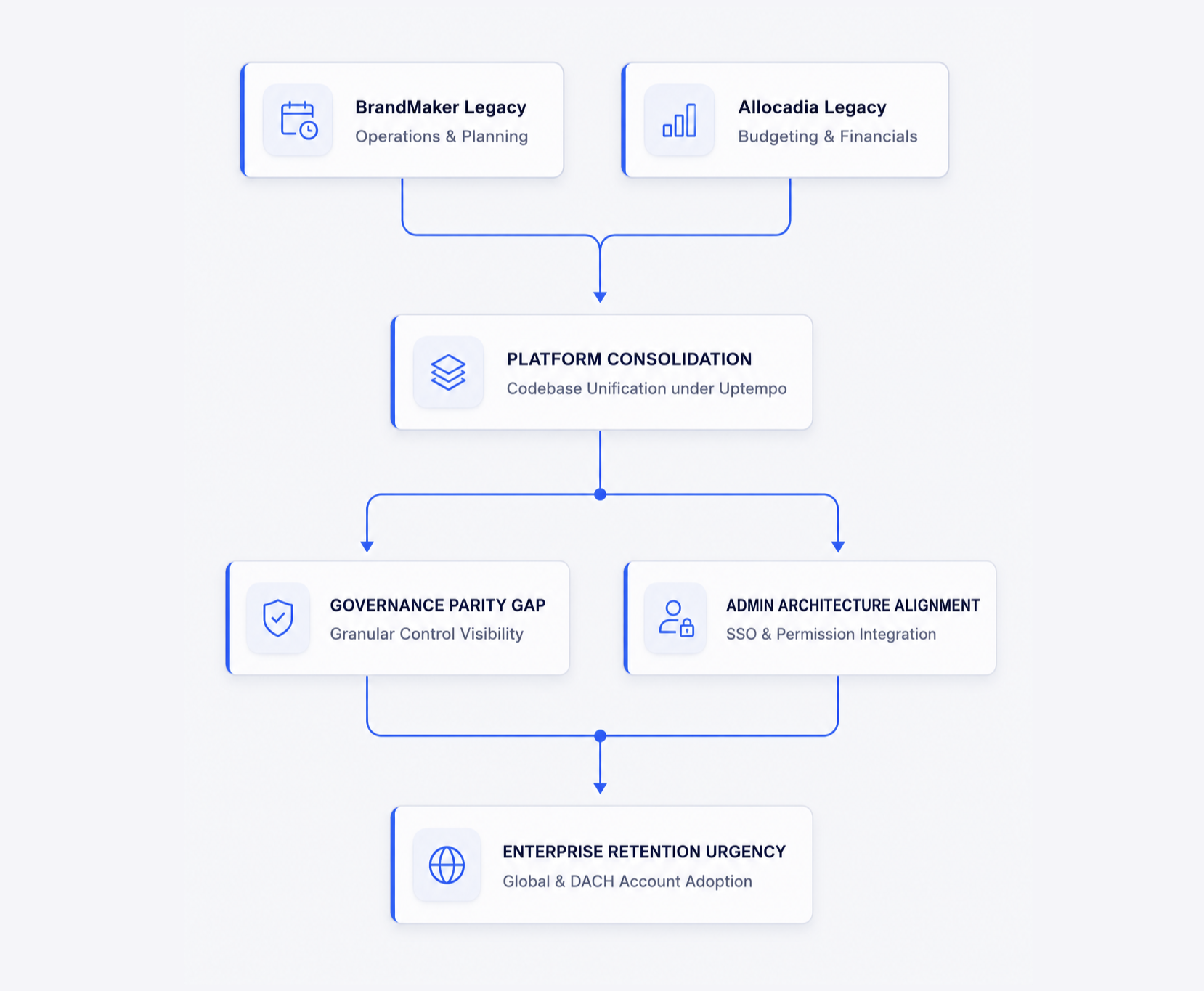
I was part of the BrandMaker product team when BrandMaker GmbH, Allocadia, and Hive9 consolidated under the Uptempo brand to build a unified Enterprise Marketing Operations platform. Historically, each legacy platform solved highly complex, specialized workflow challenges for global enterprise clients. Our primary challenge was bringing BrandMaker and Allocadia’s distinct, mature architectures together under a single brand—unifying distinct data models and administrative structures into a seamless, modern platform without disrupting core client operations.
Strategic Opportunity & Execution Focus
- Governance & Visibility Enablement: As distinct legacy platforms were consolidated into a single unified architecture, enterprise clients experienced temporary gaps in granular data visibility and administrative permissions.
- Systemic Usability Alignment: Harmonizing historical behavior differences created operational friction and extended administration time for client admins.
- Enterprise Customer Trust & Adoption: Enterprise clients in strictly regulated markets (like DACH) required full compliance and administrative parity. Addressing these migration friction points became essential to securing key account adoption and retention.
2. The Strategic Bridge: Interim Product Ownership & AI-Enhanced Discovery
While awaiting a permanent PM for the platform domain, I stepped into the Interim Product Manager role for three months during this high-stakes phase.
To free up engineering for high-priority governance capabilities, I led resource reallocation and made the hard strategic call to cancel three non-essential projects—saving significant budget and engineering time, redirecting capacity toward core enterprise enablement.
Alongside Product Management and Product UX Design, we agreed on a pragmatic path: an iterative MVP strategy focused strictly on immediate time-to-value.
Strategic Approach
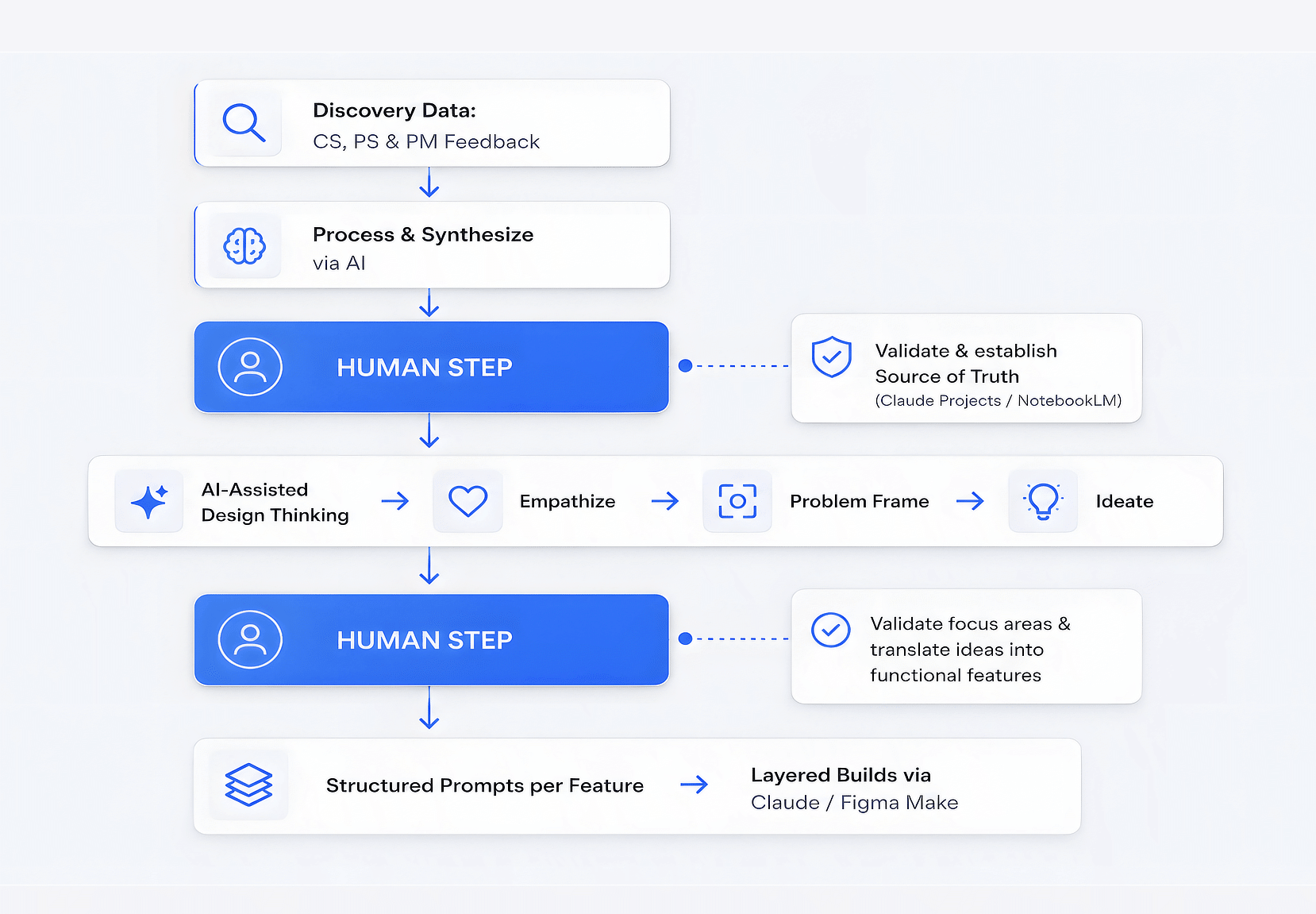
- Rapid, AI-Supported Discovery: I combined qualitative/quantitative user research with AI-driven synthesis for problem framing and market benchmarking. This compressed discovery cycles from weeks to days, sparking productive conversations and validating hypotheses with clients and colleagues in days rather than weeks.
- Fierce MVP Scoping: I actively guarded the project scope, cutting “nice-to-have” UI polish in favor of core functional enablement such as administrative group structures and data governance visibility, over non-essential UI additions.
- “Think Before Doing” Design Philosophy: As the problems we faced grew more complex and piled up day by day, I advocated across product design to shift away from undirected Figma explorations toward a written-first problem-solving model mindset—framing system logic and requirements touching the visual canvas.
- Delivery-Ready Assets: Authored AI-accelerated User Stories and contributed directly to PRDs, ensuring developers had unambiguous functional specs and clear edge-case logic before sprint implementation.
Structured AI Design Thinking Pipeline
To keep our discovery grounded, repeatable, and fast, I established a structured AI workflow based on Design Thinking principles:
3. Lateral Leadership in the "Messy Middle"
Building software in a constrained legacy environment is rarely a linear process. My primary responsibility, and this is where my PM played a huge role in trusting and letting me direct this initiative, was keeping stakeholders, product leads, and developers aligned—even when hard decisions met resistance.
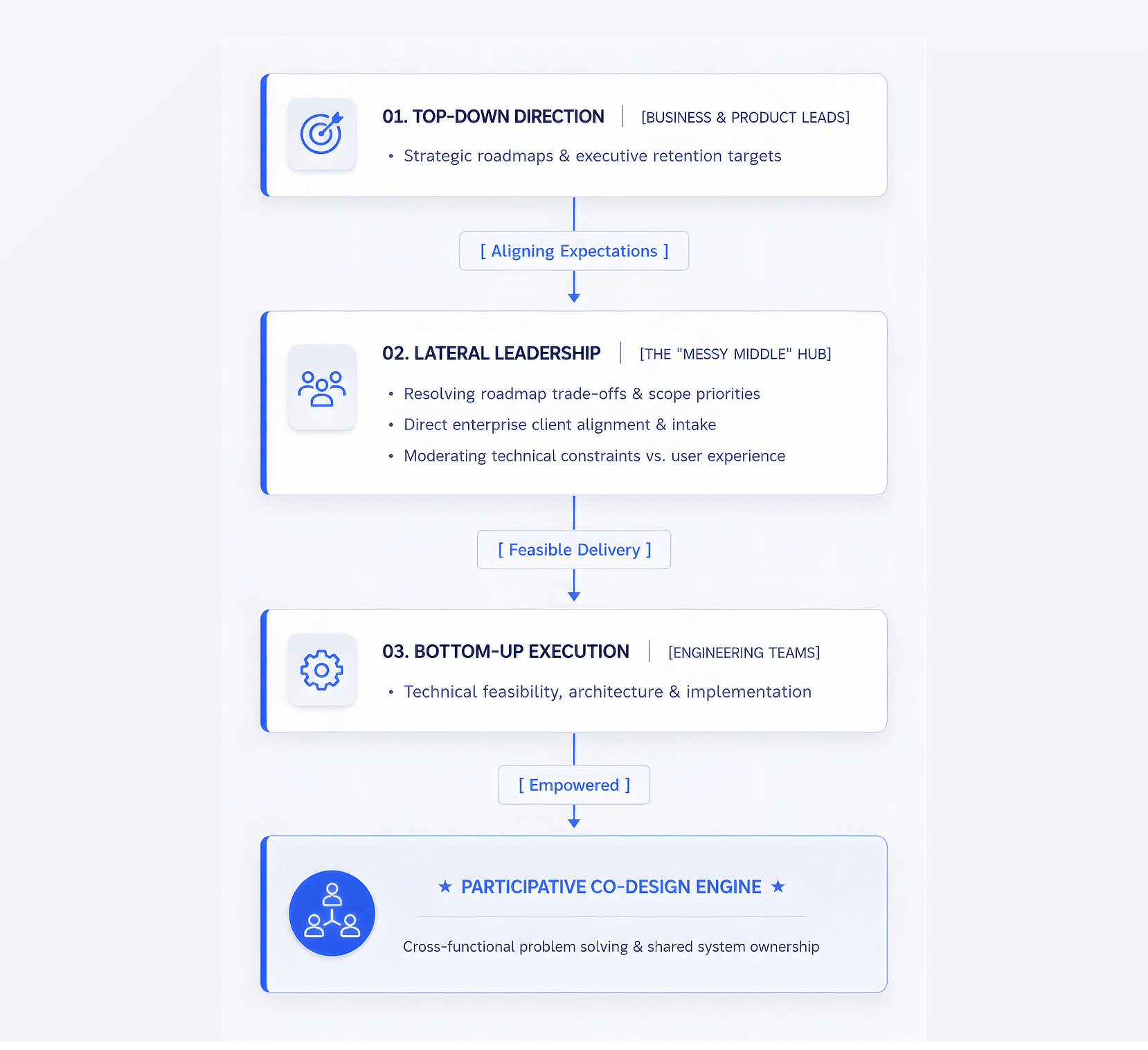
- Direct Client Engagement & Feedback Loops: Alongside PMs, I met directly with enterprise clients to address migration concerns regarding missing legacy administrative capabilities. I learned firsthand that for high-stakes enterprise workflows, core functional utility, predictability, and governance always precede aesthetic form.
- De-risking Engineering: By involving developers during the early discovery phase, we stress-tested legacy feasibility before writing user stories or code. I empowered engineering as an active partner in co-design, operating under the principle: “No idea is a bad idea; everyone has a voice, and not all solutions come from UX.”
- Exercising Emotional Intelligence: I mediated roadmap trade-offs between leadership’s high expectations, PM requirements, and engineering’s technical limits, maintaining team trust under tight deadlines.
4. Deep Problem Solving Over "Pretty Pixels"
When client discovery calls became a bottleneck and cross-team dependencies threatened to stall platform releases, I leveraged my domain experience to propose pivoting from traditional long-cycle user research to a pragmatic “Ship First, Validate In-Market” strategy.
We agreed that success would not be measured by polished visual mockups, but by system capability, platform stability, and speed to developer-ready handoff.
The “Ship First, Validate In-Market” Approach
- Pragmatic Heuristics Over Prolonged Discovery: Instead of waiting weeks for client interviews, we grounded design decisions in established platform patterns, UX heuristics, competitive market standards, and domain knowledge.
- Ship First, Validate Later: We deployed core functional MVPs directly to production, establishing rapid, real-world feedback loops with active enterprise clients.
- Functional Layouts: We prioritized clean, functional interface layouts stripped of non-essential visual elements to ensure engineering could implement components smoothly within legacy codebase constraints.
Some of the key system solutions implemented
User Management Echosystem
-
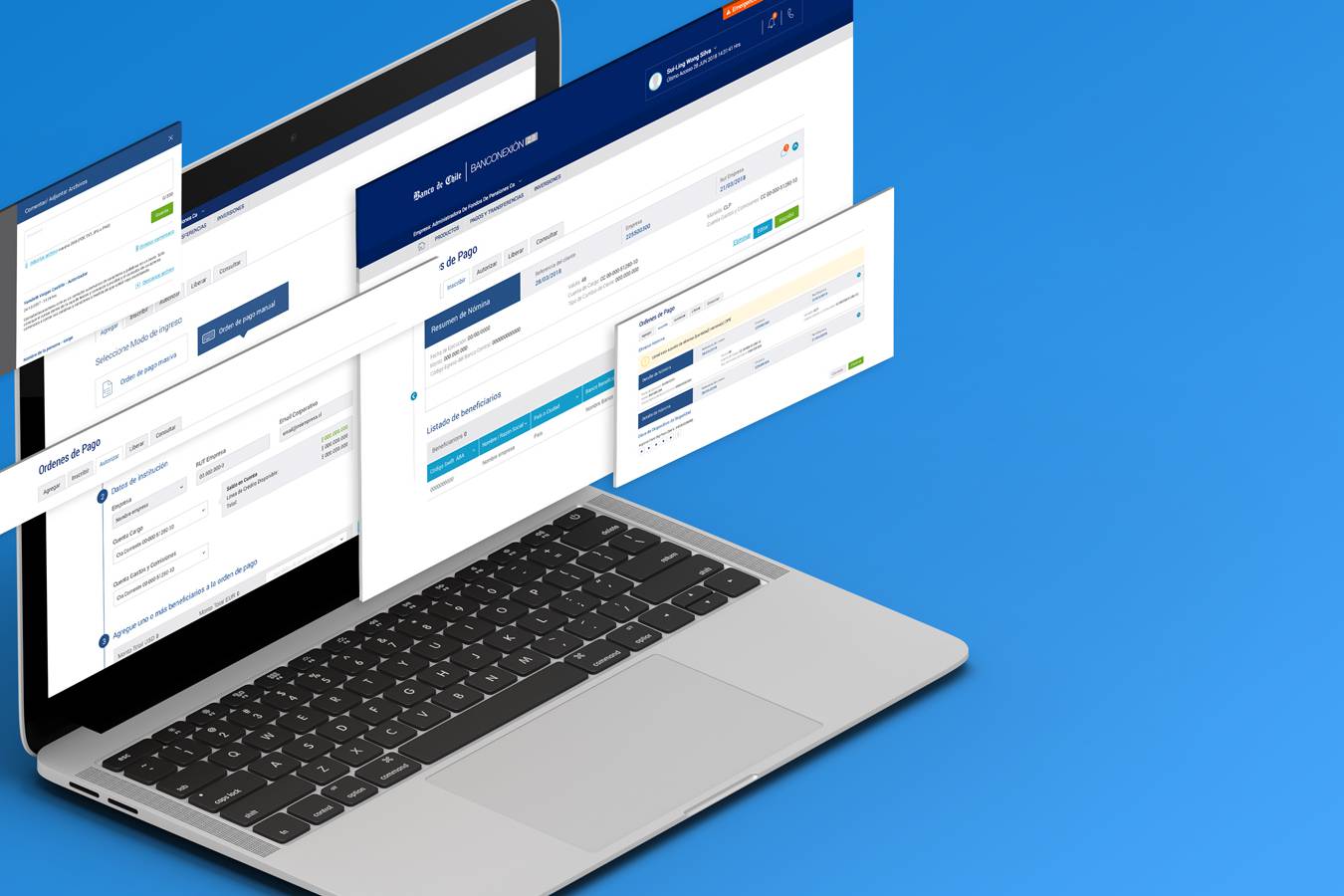
The Problem: Enterprise administrators within the BrandMaker (DACH) ecosystem relied on proven administrative controls, assigning roles and permissions, and maintaining organizational visibility. As platforms consolidated under Uptempo, re-architecting and unifying these core governance controls became a top priority to reinforce client confidence, secure long-term account retention, and create smooth momentum for the transition to the unified platform.
-
The Solution: Rather than applying a short-term patch strictly for legacy BrandMaker workflows, we designed a forward-compatible user management architecture built to fulfill immediate DACH enterprise governance needs while establishing a scalable foundation and operational stability for the combined platform.
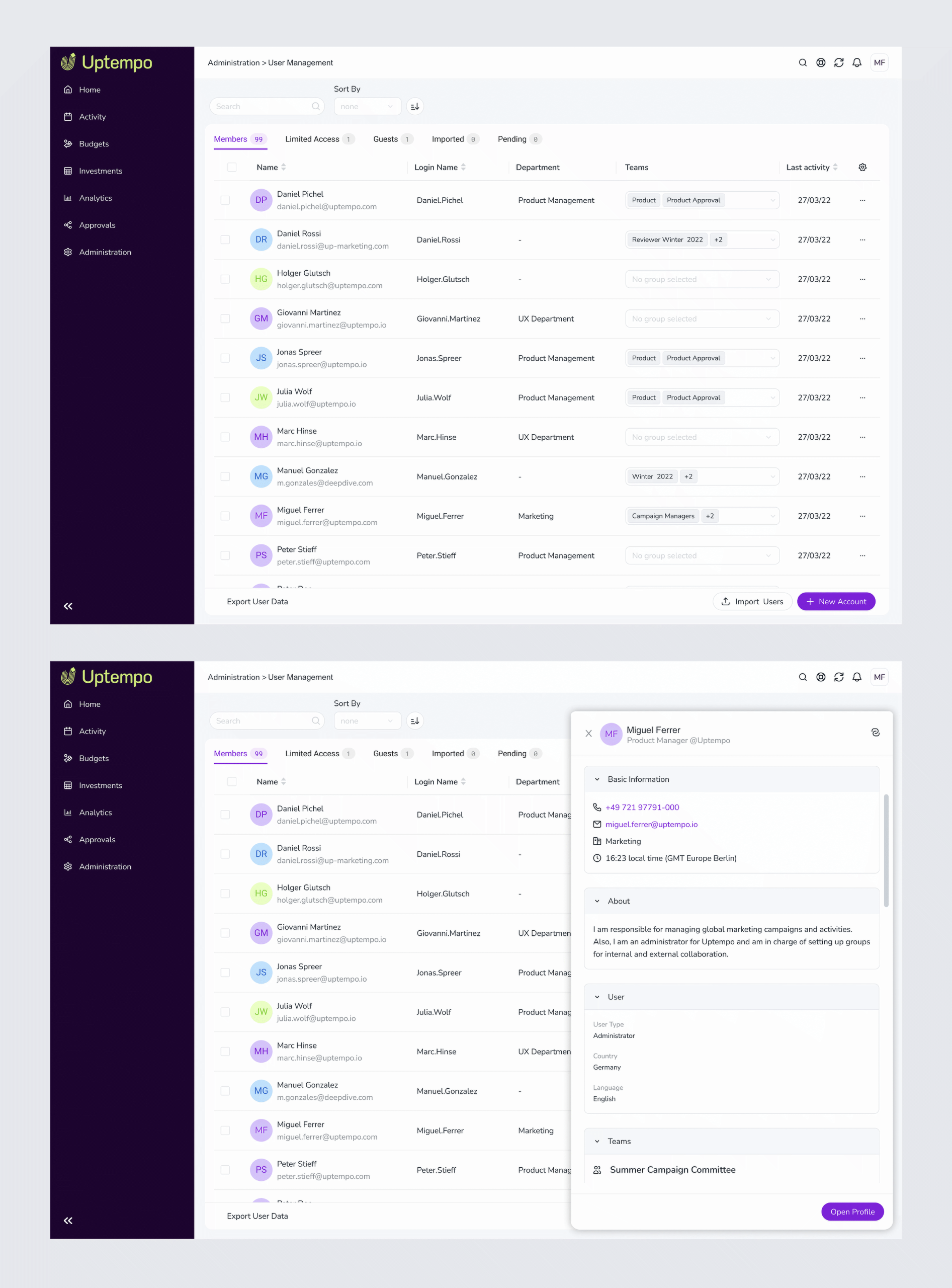
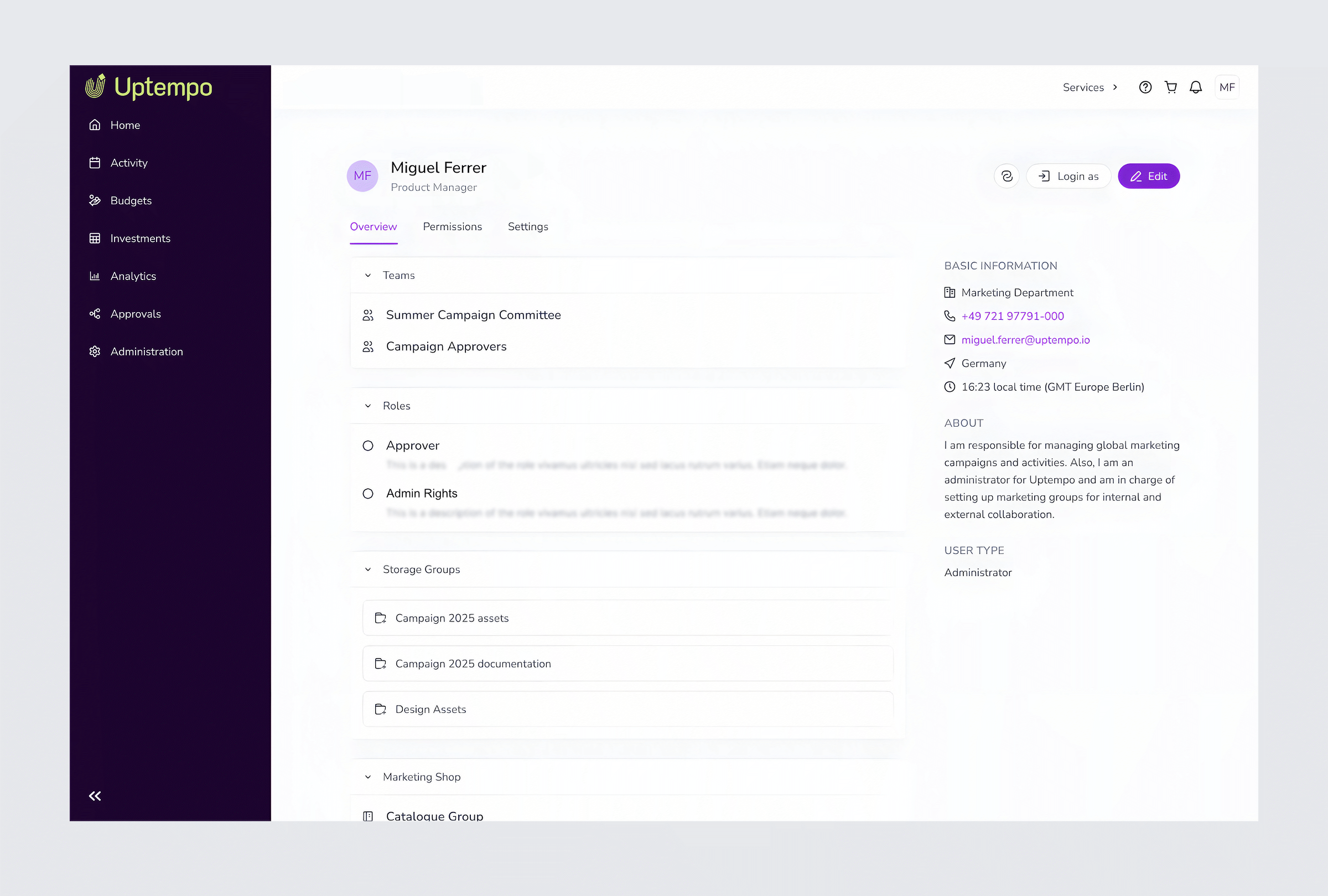
- Administrative Capabilities: Restored and elevated centralized user lifecycle management, role-based access control (RBAC) mapping, permission structures, and regional privacy-compliant administrative oversight across complex multi-entity enterprise accounts.
Fiscal Year Setup
- The Challenge: Supporting enterprise clients with custom, non-standard fiscal calendar models matching their corporate financial cycles—which needed to be implemented directly within the legacy platform side in parallel with our long-term unification efforts. Capturing these multi-layered financial dependencies required bridging complex requirements among Product Management, Data Analytics, and Engineering without stalling the platform’s delivery momentum.
- The Solution: Synthesized dense financial rules and data dependencies into clear, structured workflow layouts—establishing a unified structural blueprint across Product, Analytics, and Engineering. Demonstrates how complex administrative capabilities in enterprise SaaS require rigorous logical architecture and cross-functional clarity to deliver long-term platform trust.
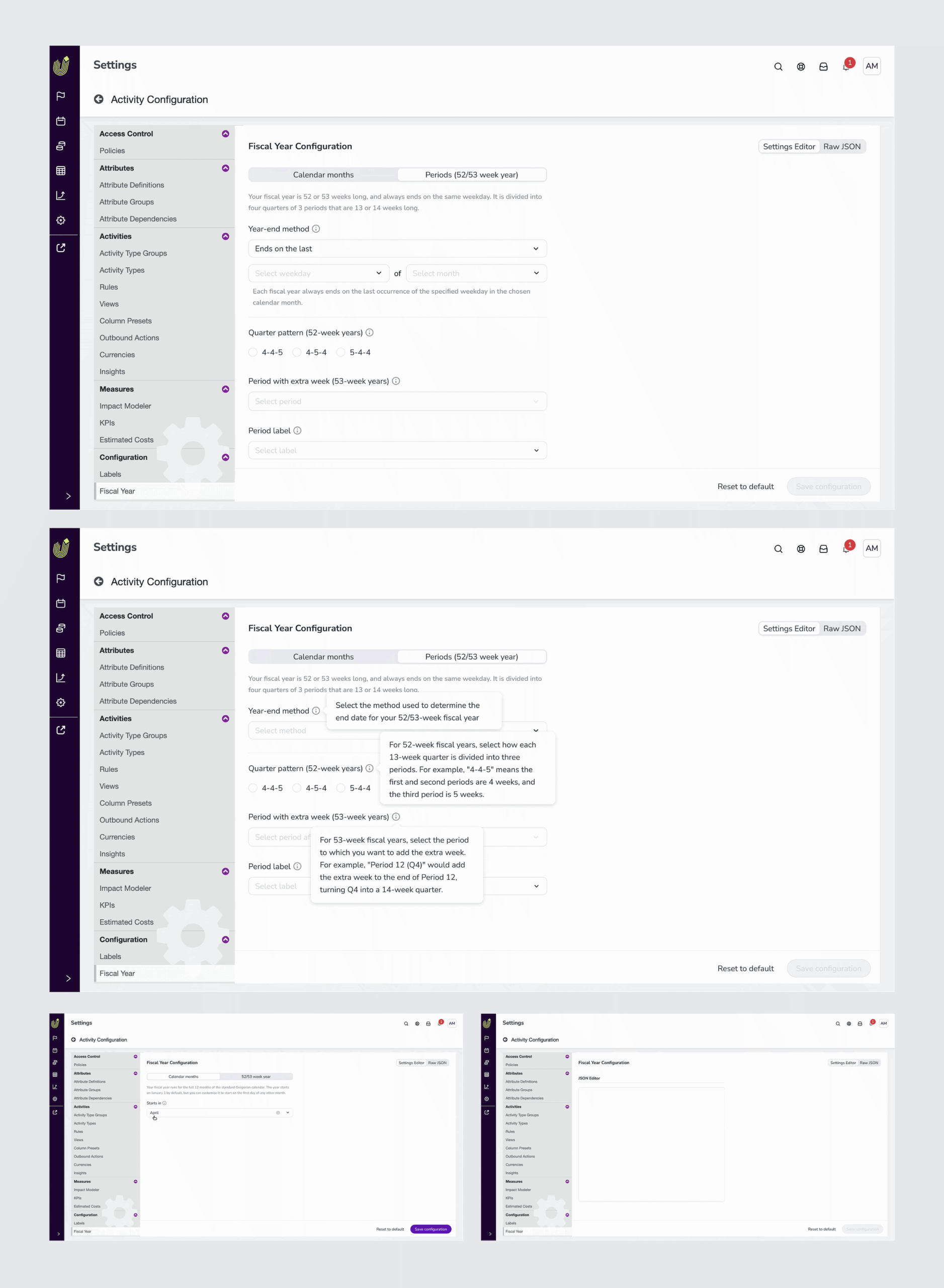
- Administrative Capabilities: Enabled custom fiscal calendar configurations aligned with non-standard corporate financial cycles, providing admins with centralized control over multi-year budgeting, campaign planning windows, and financial reporting periods.
Single Sign-On (SSO) Groups
- The Challenge: Upgrading legacy BrandMaker clients to the unified platform depended on restoring granular SSO team hierarchies amid tight deadlines and stakeholder indecision.
- The Solution: I used AI-assisted prototyping tools (Figma Make) to explore structural variations rapidly. This aligned the PM and key stakeholders within a single day, allowing us to validate and hand off the complete design spec within a week.
- Pragmatic Workaround: To bypass core platform infrastructure bottlenecks, we partnered with PMs to leverage Workato third-party integrations, saving significant development effort.
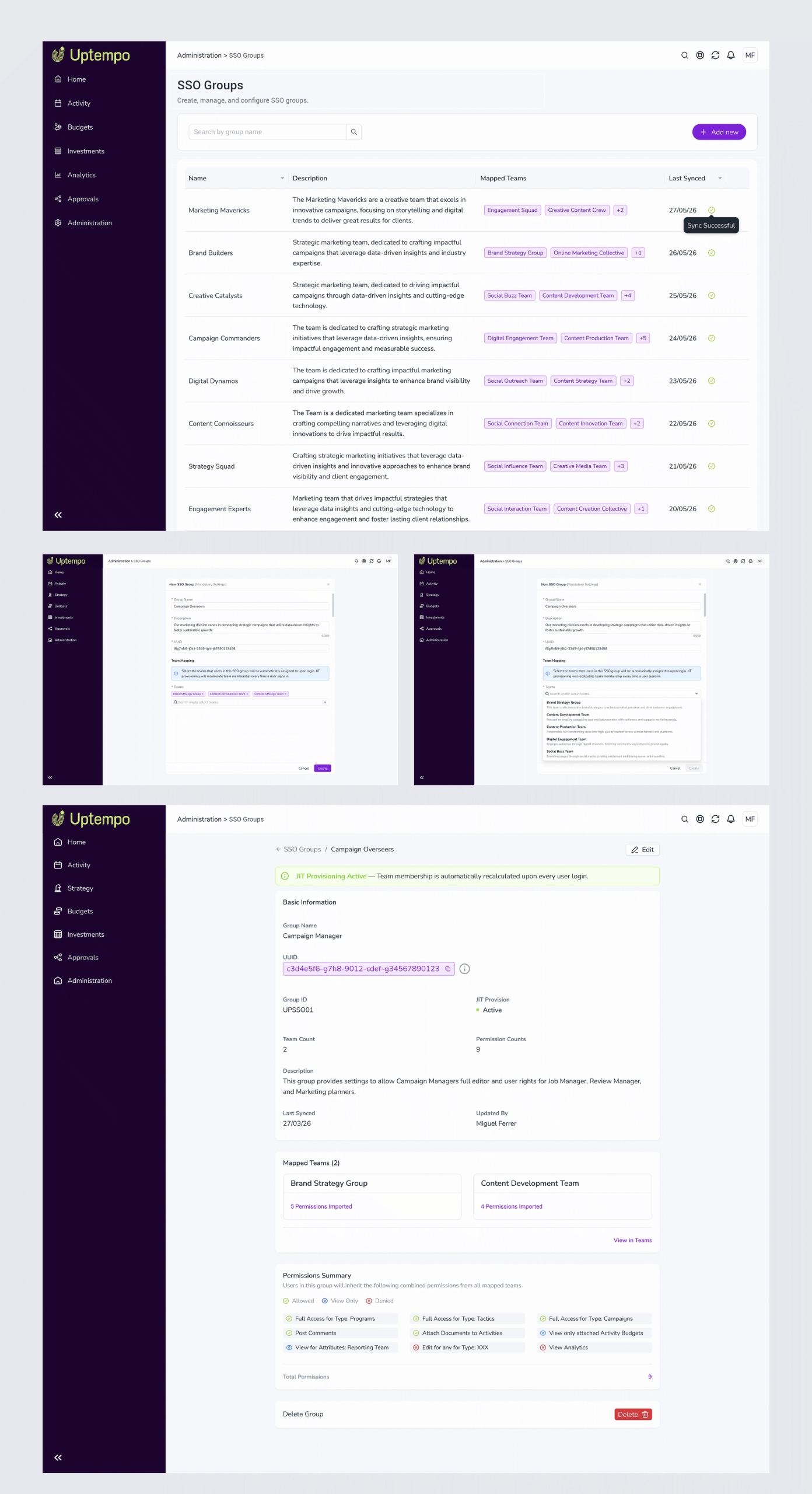
- Administrative Capabilities: Re-established automated user provisioning via Identity Providers (IdP), central access control mapping, granular SSO group permissions, and unified cross-platform team hierarchy management.
Intentional AI Prototyping (Claude + Figma MCP)
As time became a constraint and escalations increased, I realized we now needed to include AI in the design process as a generative force, not only for prototyping but for full delivery.
- The Philosophy: I proceeded to validate whether I could design using only generative AI intentionally as a controlled, code-accurate prototyping force—avoiding the low-quality visual “slop” produced by unconstrained AI design generators.
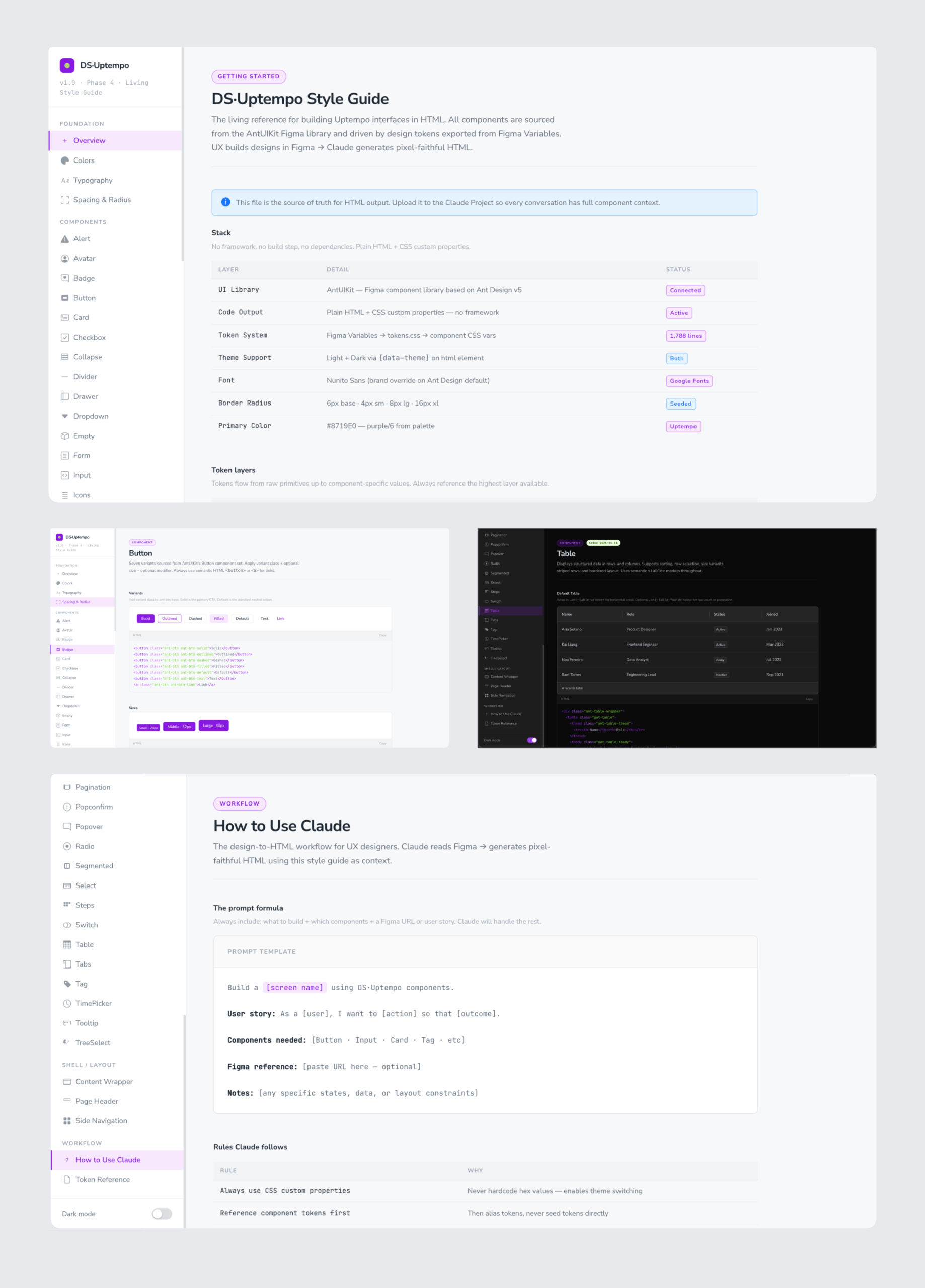
- The Execution: I paired Claude AI with some of my past front-end design background (HTML/CSS/JS) and the Figma MCP integration to rebuild our design system components directly in functional code.
- The Impact: After some back and forth, I built an exact replica of our Figma components, enabling me to create modular, “LEGO-like” interactive prototypes ready for development, testable projects, drastically reducing turnaround time for medium-scale initiatives.
From User Management to Self-Service
- The Problem: Discovery calls confirmed a core problem about user management. Enterprise accounts for key clients like HubSpot lacked native in-platform visibility into whether licensed seats were actively used, relying on manual GoodData/Excel exports that were being sunset. Admins needed actionable usage metrics (session frequency, time-in-tool, cost-center allocation) to reclaim inactive seats under strict license caps.
- The Solution & GDPR Trade-off: Modern admin tools require actionable data, not just static user lists and profiles. We moved from traditional user management into active governance dashboards. When individual user behavioral tracking clashed directly with EU GDPR regulations, we introduced a Feature Flag architecture—enabling granular tracking for US clients immediately while suppressing behavioral tracking in the EU pending legal review, delivering instant business value to US accounts without creating European compliance risks.
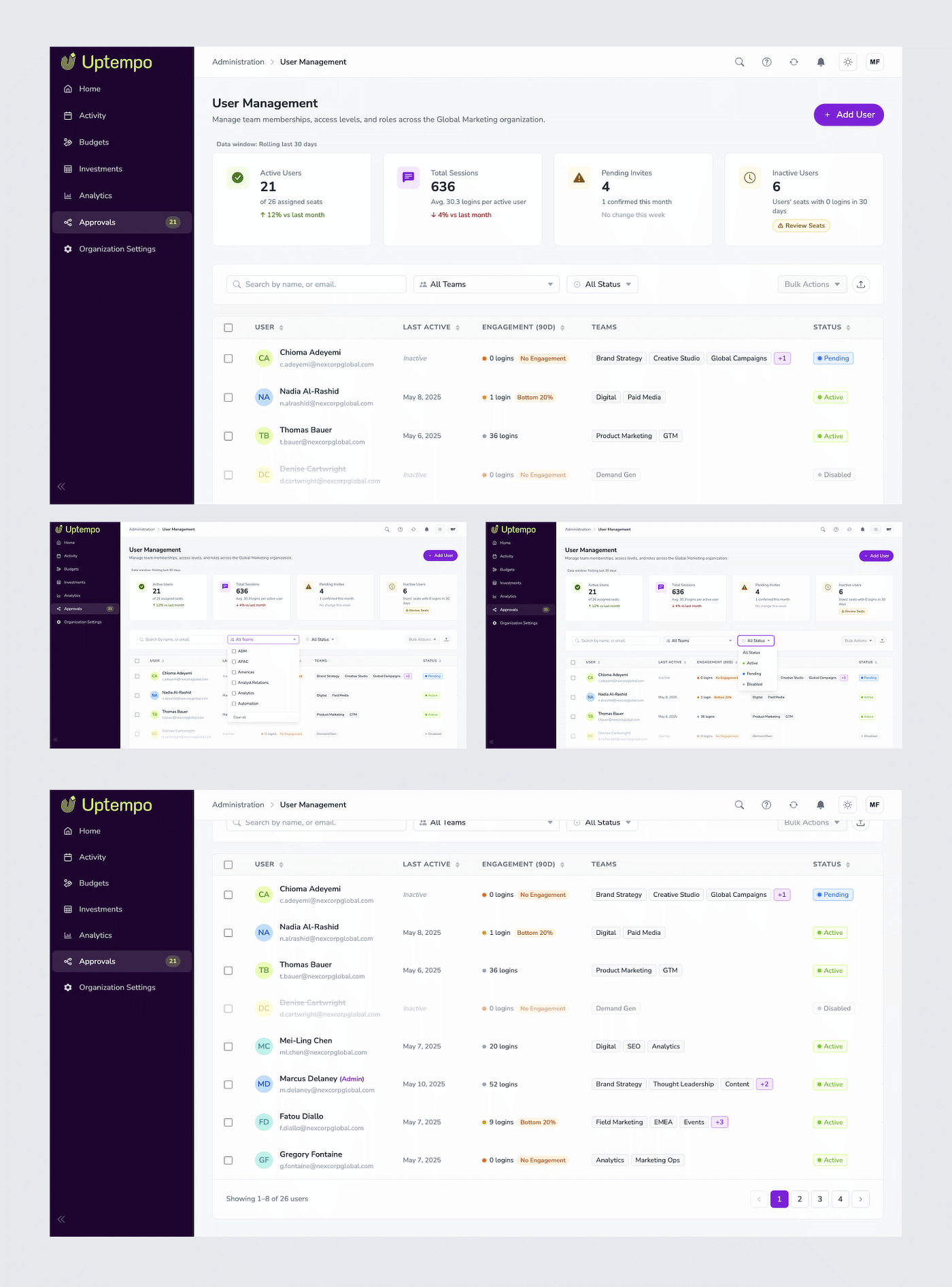
- Administrative Capabilities: Delivered real-time license utilization visibility, active seat harvesting/reallocation based on usage metrics, cost-center allocation tracking, and GDPR-compliant regional privacy controls via feature flag toggles.
Centralized Notification Center
- The Problem: A vital legacy BrandMaker capability required across Campaign and Financial modules. For BrandMaker clients, it was about recovering capabilities; for Allocadia clients, it was the need for a feature they never had.
- The Solution: While Customer Success demanded granular, role-based activity controls that exceeded available engineering story points, I led the trade-off decision to ship an iterative MVP grounded in market standards. This delivered immediate core functionality within sprint budget without falling into the trap of building a “perfect product” at launch.
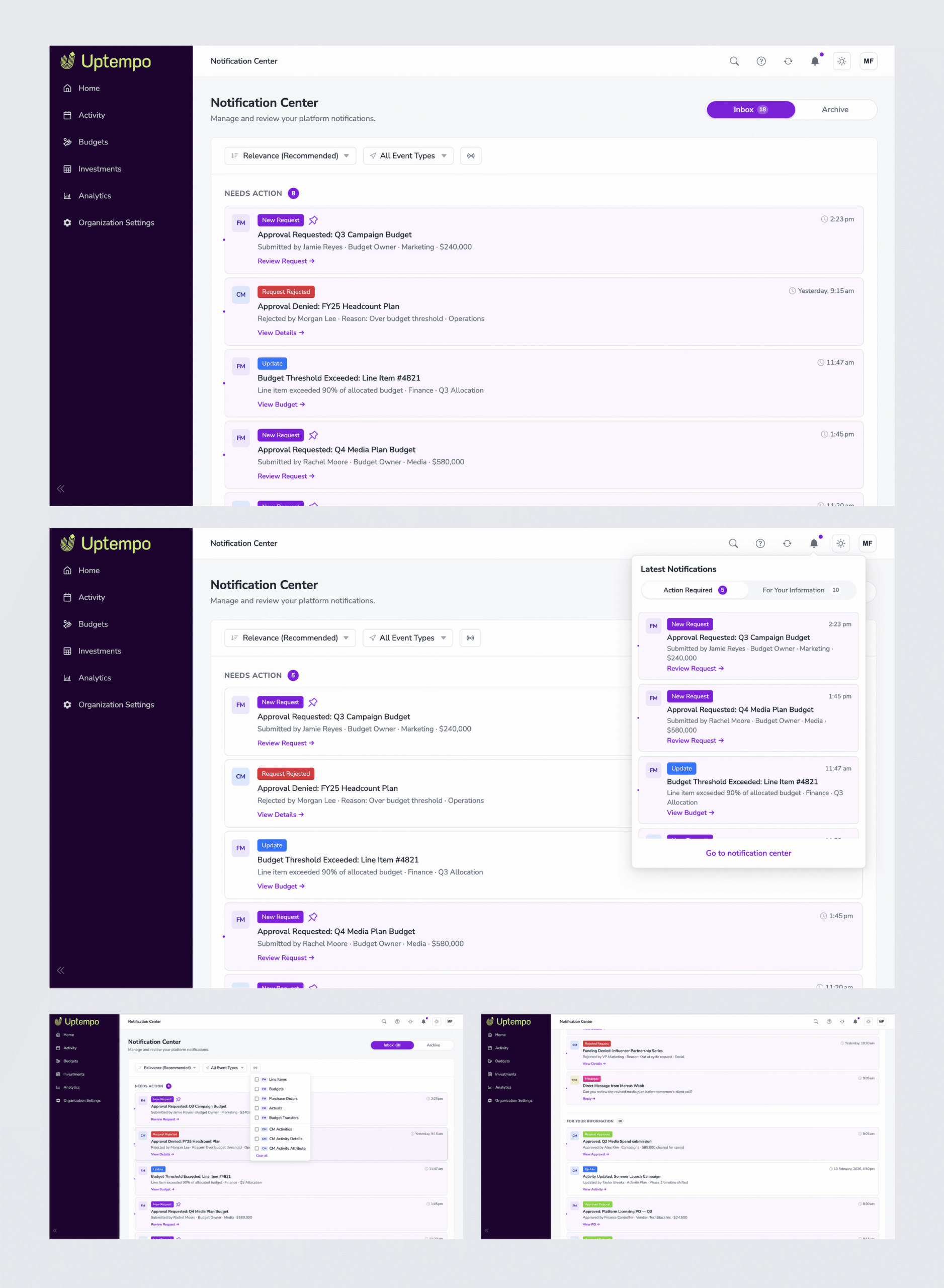
- Administrative Capabilities: Restored system-wide event triggering, customizable in-app and email alert rules, role-based event subscriptions, and real-time activity status visibility across both campaign and financial modules.
Teams Management & Integration Strategy
- The Problem: Restoring cross-platform team management capabilities had been stalled for over a year due to heavy engineering backlogs.
- The Solution: I collaborated closely with my Financial Management design counterpart to establish an incremental rollout plan. We focused strictly on minimal achievable core functional requirements and bridged backend infrastructure gaps using Workato third-party integrations to satisfy immediate client needs.
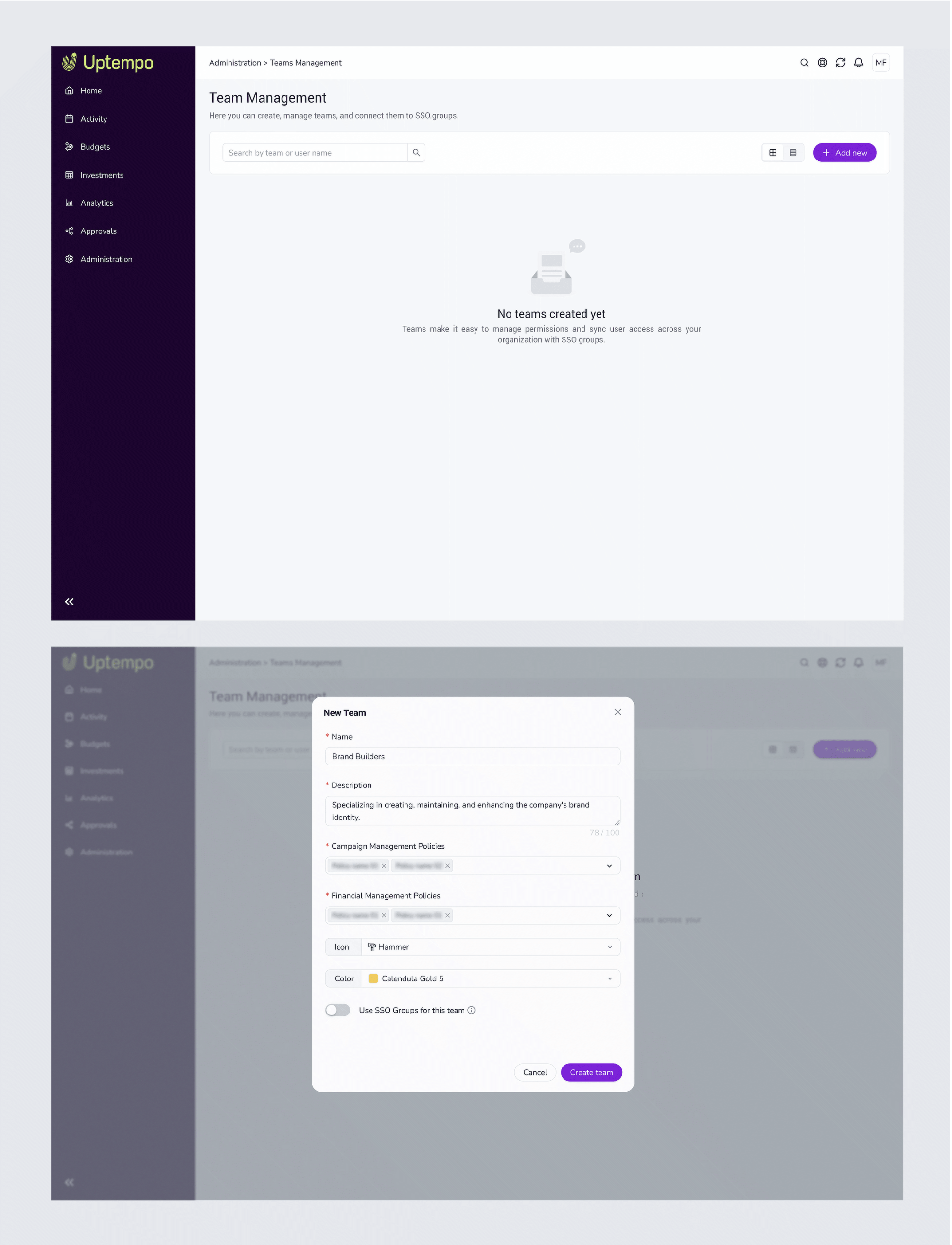
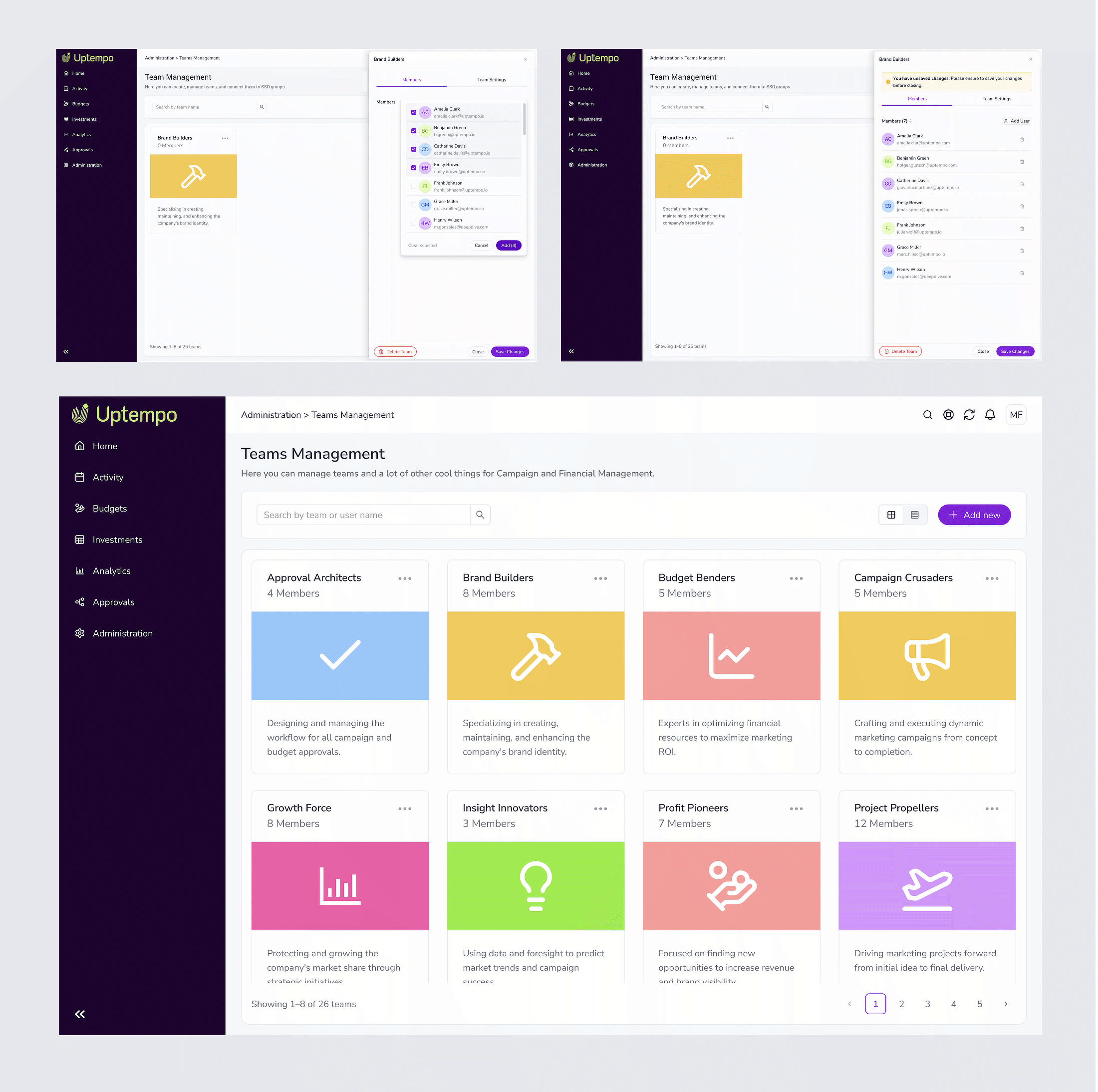
- Administrative Capabilities: Re-aligned cross-platform team structures, established delegated organizational roles, and enabled synchronized team management across integrated backend system endpoints.
5. Business Impact & Measurable Outcomes
Key Takeaway
“In enterprise B2B SaaS, design leadership isn’t about pushing pixels—it’s about navigating technical constraints, making pragmatic trade-offs alongside engineering, and delivering immediate business value when client retention is on the line.”
| Objective / Strategic Focus | Key Solution & Execution | Business Impact & Outcome |
| Enterprise Account Retention | We re-architected core administrative governance, permission structures, and SSO group hierarchies across the platforms. | Protected Key Account Revenue: Equipped Customer Success with tangible MVP prototypes and clear release timelines, effectively de-escalating critical client relationships and giving accounts confidence in short-term platform recovery. |
| Engineering Capacity Optimization | Stepped into Interim PM leadership. I paused 3 non-essential initiatives and reallocated team bandwidth. | Resource Alignment: Unlocked critical engineering capacity, redirecting 100% of sprint story points toward core platform architecture fixes. |
| Design-to-Dev Efficiency | Established a written-first “Requirements & User Stories First” workflow prior to Figma visual exploration, eliminating wasted design iterations | Eliminated Wasted Iterations: Delivered dev-ready PRDs and precise user stories directly to engineering, accelerating sprint implementation. |
| Discovery & Delivery Velocity | Established an AI-native discovery pipeline using a mix of Claude, Gemini, and NotebookLM, paired with a written-first PRD specification process. | 50% Cycle Time Reduction: Compressed discovery, problem framing, ideation and hypothesis validation from weeks to days, delivering dev-ready stories ahead of sprint timelines. |
| End-to-End AI Design Workflow | Engineered an AI framework in Claude and Figma MCP that bridged initial prototyping directly into final design, reducing reliance and sometimes eliminating intermediate static canvas recreations. | 50%+ Velocity Gain: Compressed project turnaround times by 50%+ on medium-complexity initiatives while maintaining early customer validation loops. |
| Cross-Functional Alignment | Facilitated participative co-design sessions and direct feedback loops between Product, Engineering, CS, and Enterprise Admins. | High Stakeholder Trust: Replaced reactive firefighting with shared ownership, shared source of truth, and team trust across all cross-functional partners. |