Project Overview
Matmatch GmbH, an online platform that helps product designers and engineers find, evaluate, and source materials by connecting them with the right suppliers.
THE PROBLEM TO BE SOLVED
Matmatch set out with an ambitious mission: to become the go-to platform for product designers and engineers to discover, evaluate, and source materials. But the platform was struggling to deliver on that vision.
- B2C users found limited value in the experience.
- B2B suppliers were reluctant to renew contracts because too few qualified leads were generated.
- Internally, there was resistance to change, which slowed innovation.
This combination of user dissatisfaction, supplier churn, and organizational inertia threatened the platform’s growth and long-term viability.
MY ROLE
The company needed someone who could combine product ownership with UX expertise (strategic vision with practical execution). My role was to guide the product through discovery, validation, and iteration, balancing strategic vision with the practical realities of execution.
I worked side by side with the Product Manager, co-owning the product direction and setting processes that introduced a user-first mindset across the organization. This meant facilitating collaboration between engineering, sales, and marketing, aligning stakeholders on priorities, and ensuring that user needs were consistently tied back to business outcomes.
In practice, I was responsible not just for creating design solutions but for influencing product strategy, framing opportunities, and driving decisions that would shape Matmatch’s value proposition.
Building Foundations
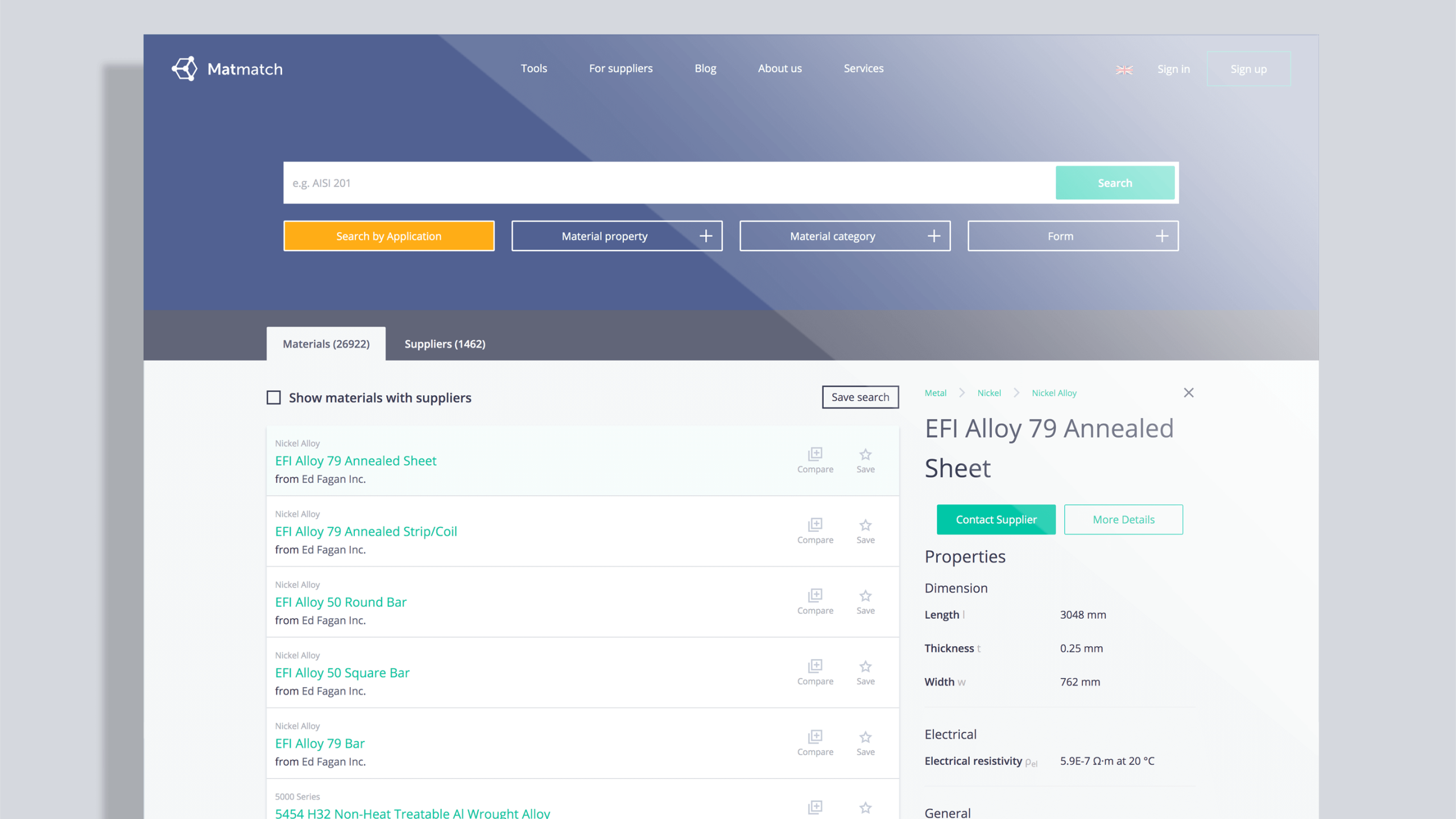
Upon my arrival, my first months were dedicated to understanding the product, the users, and an unfamiliar industry.
I began by stabilizing the platform and laying the groundwork for larger changes, reducing maintenance and improvements by eliminating design debt, simplifying workflows, and introducing a scalable design system to ensure consistency and accelerate development.
RETHINKING THE PRODUCT VALUE PROPOSITION
Small but steady changes helped restore trust in the product and laid the foundation for larger transformations. But research evidence and stakeholder feedback made it clear that the value proposition needed rethinking.
Matmatch’s value proposition was misaligned with both sides of its marketplace. Engineers struggled to find relevant material data, and suppliers were unwilling to renew because the platform generated too few qualified leads.
And after a year of incremental improvements, it became clear that maintaining the status quo was not enough.
Driving Strategic Shift and Facilitating Product Transformation
To reduce the resistance to change, we needed to make user feedback and research visible to our stakeholders.
To move forward, we introduced new frameworks that helped stakeholders identify opportunities and understand how the product could evolve.
It was not enough to create full personas, user journeys, or other related research artifacts, but it was sufficient to establish a user-first mentality within the company.
We established a cross-functional team with our Data science engineers, marketing, and sales to reimagine the product direction, and as a facilitator, I ensured all voices were heard while keeping focus on user needs.
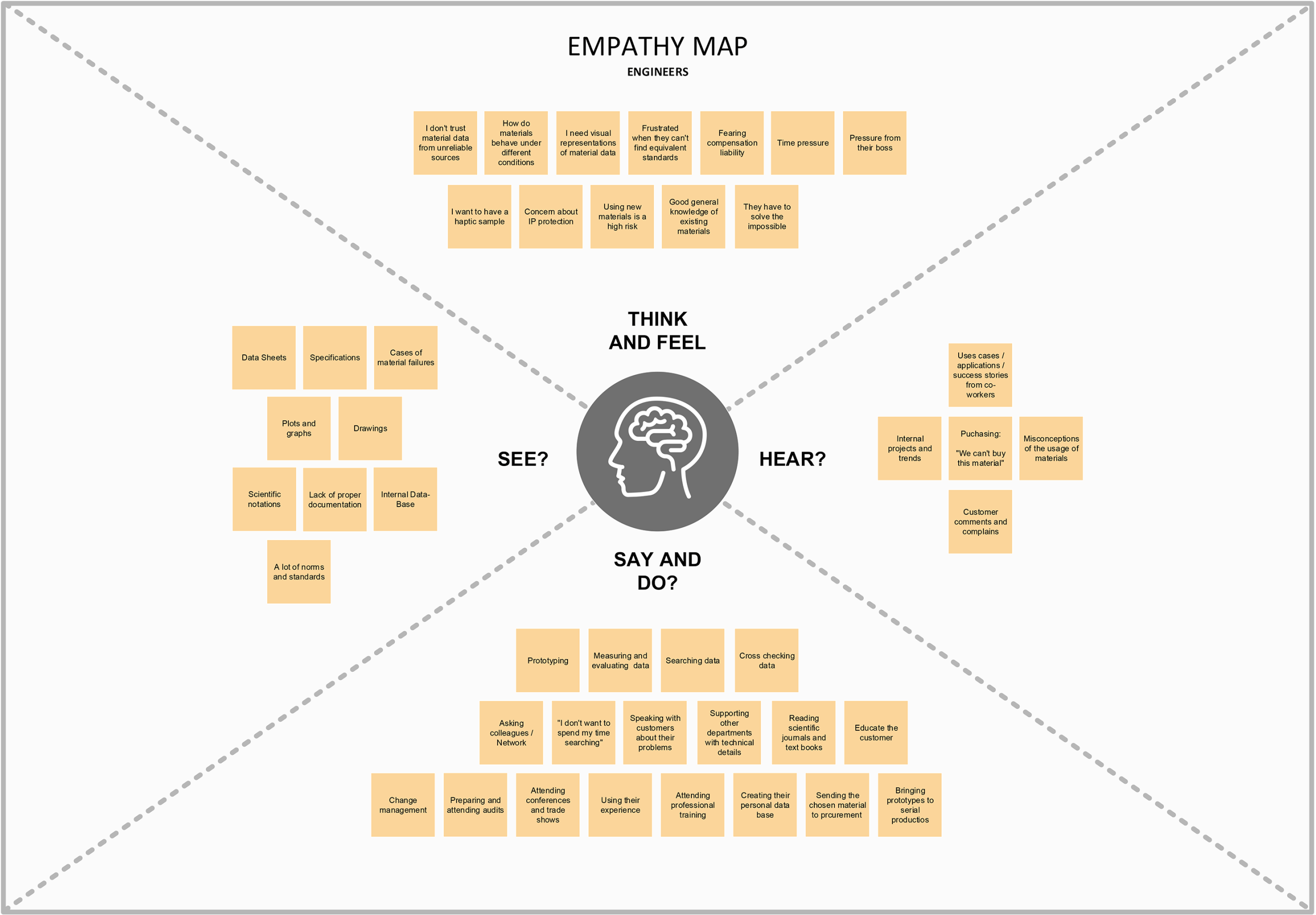
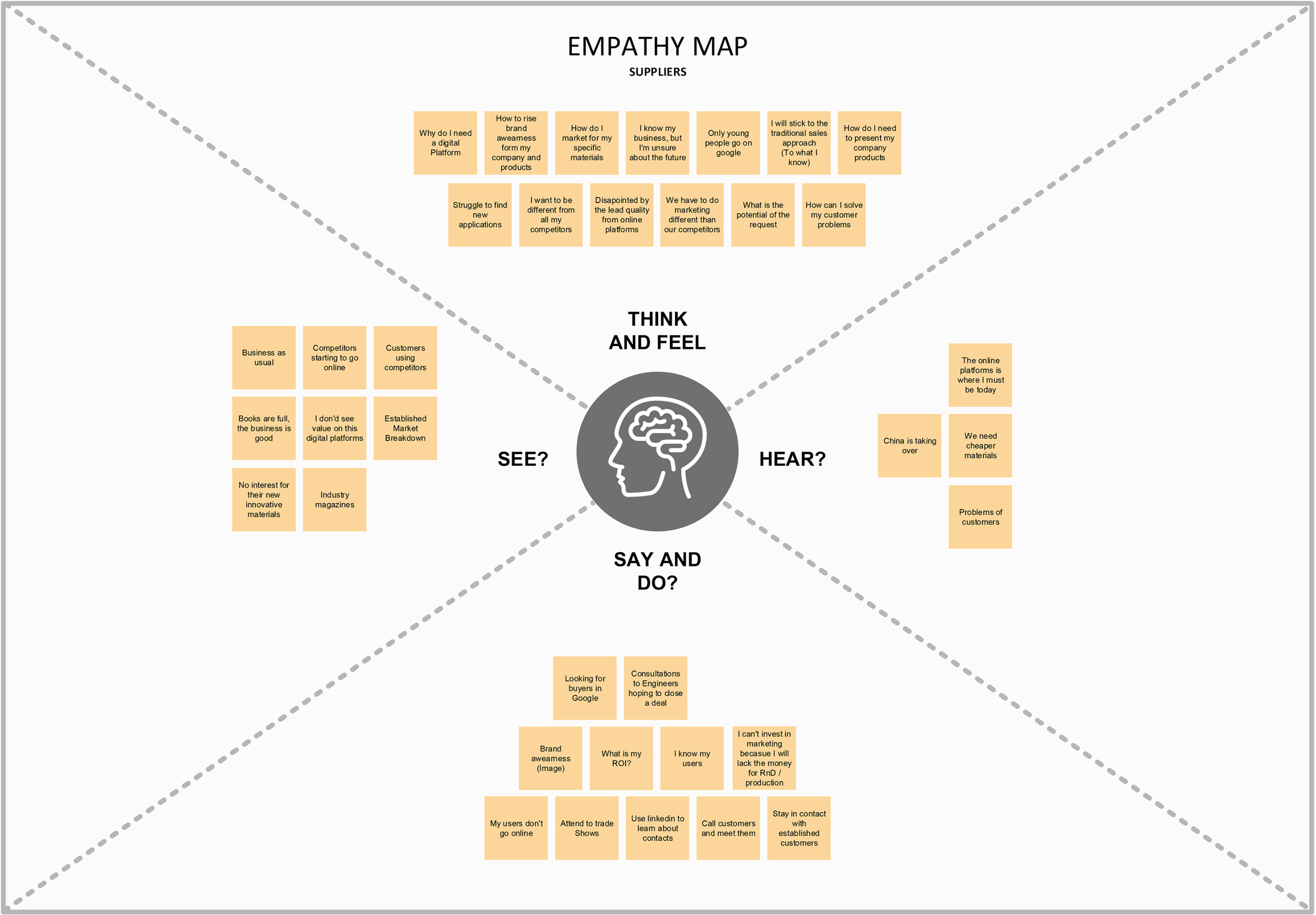
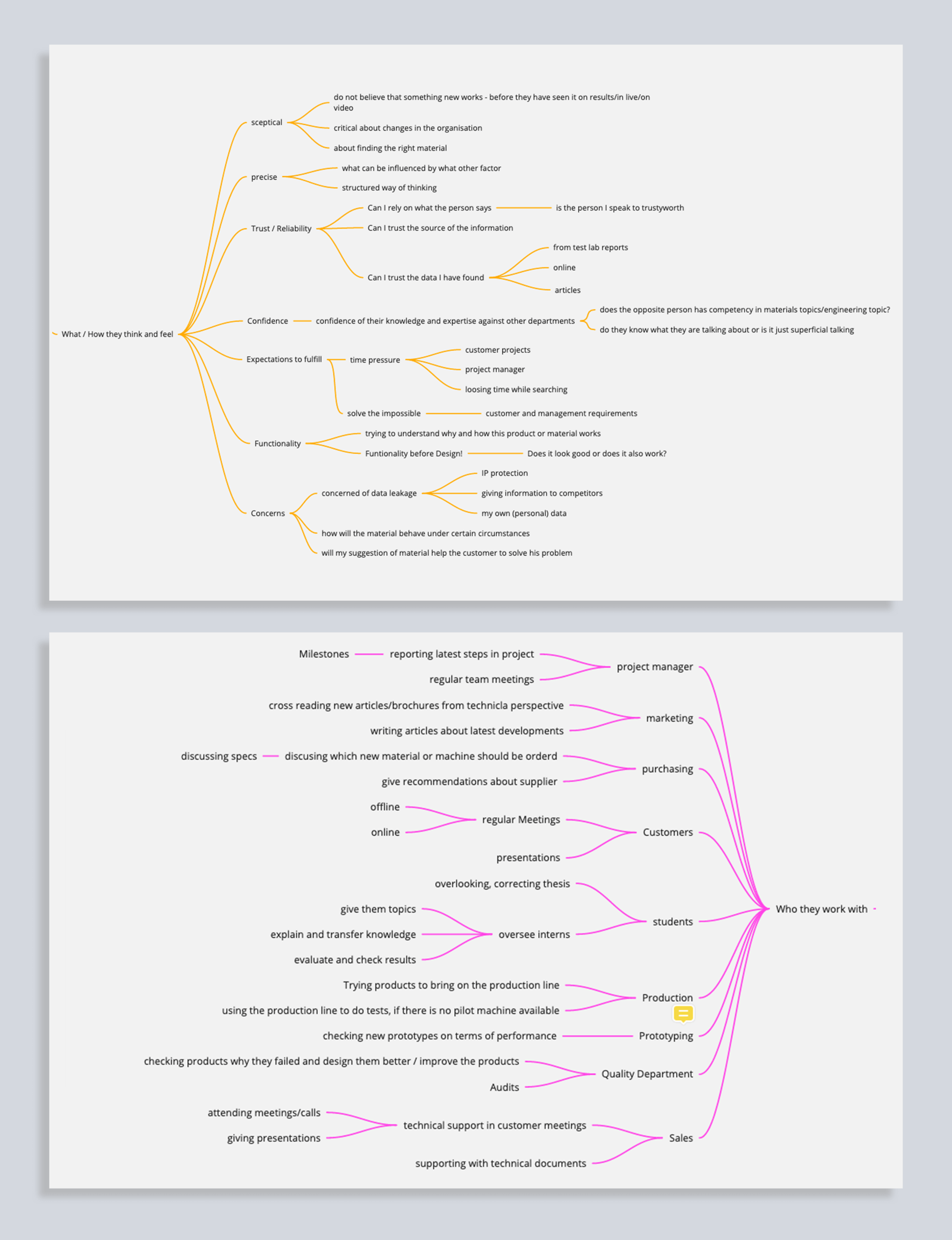
Empathy maps & data synthesis:
Making user insights visible across the company. Very useful to help team members understand the user’s mindset.
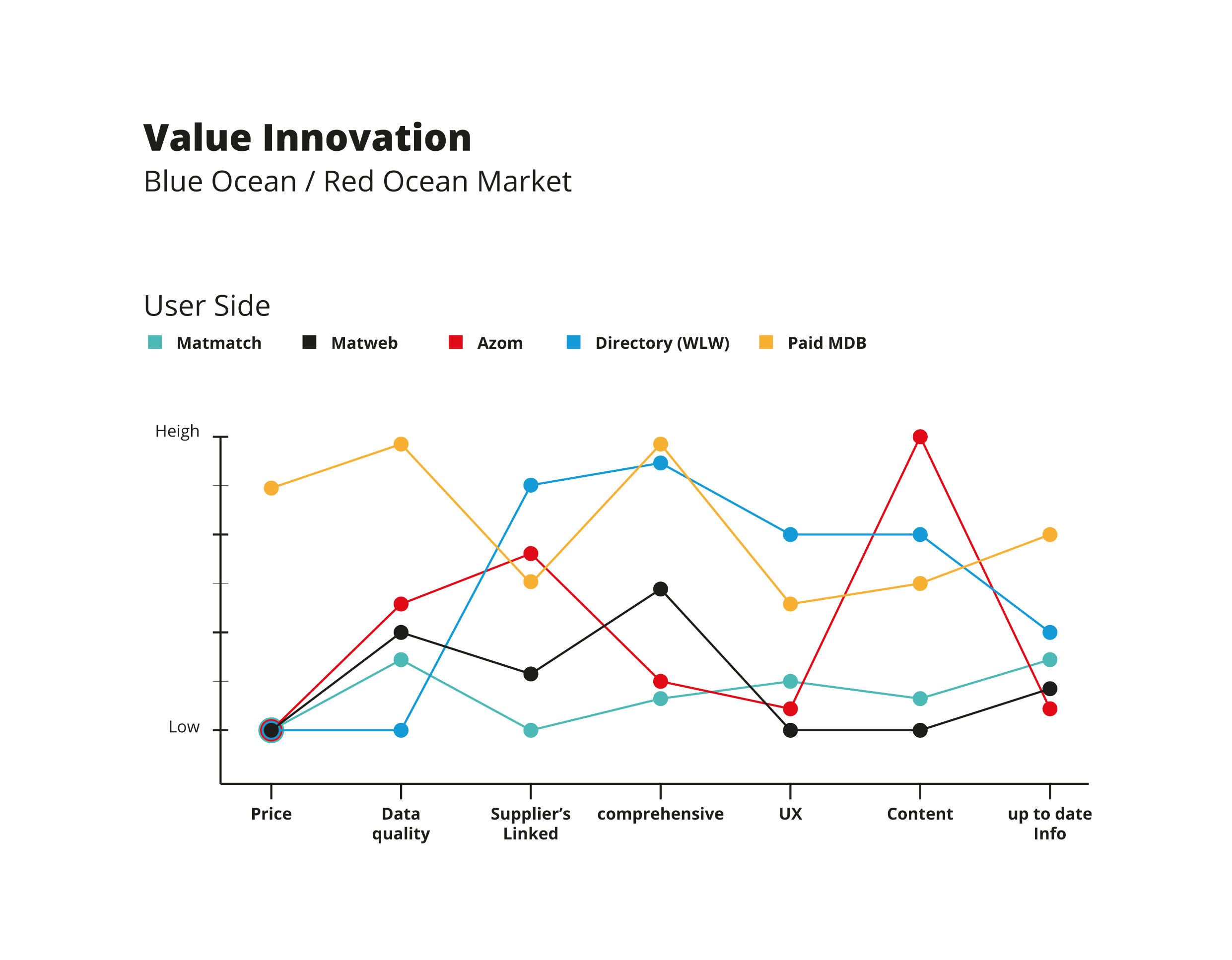
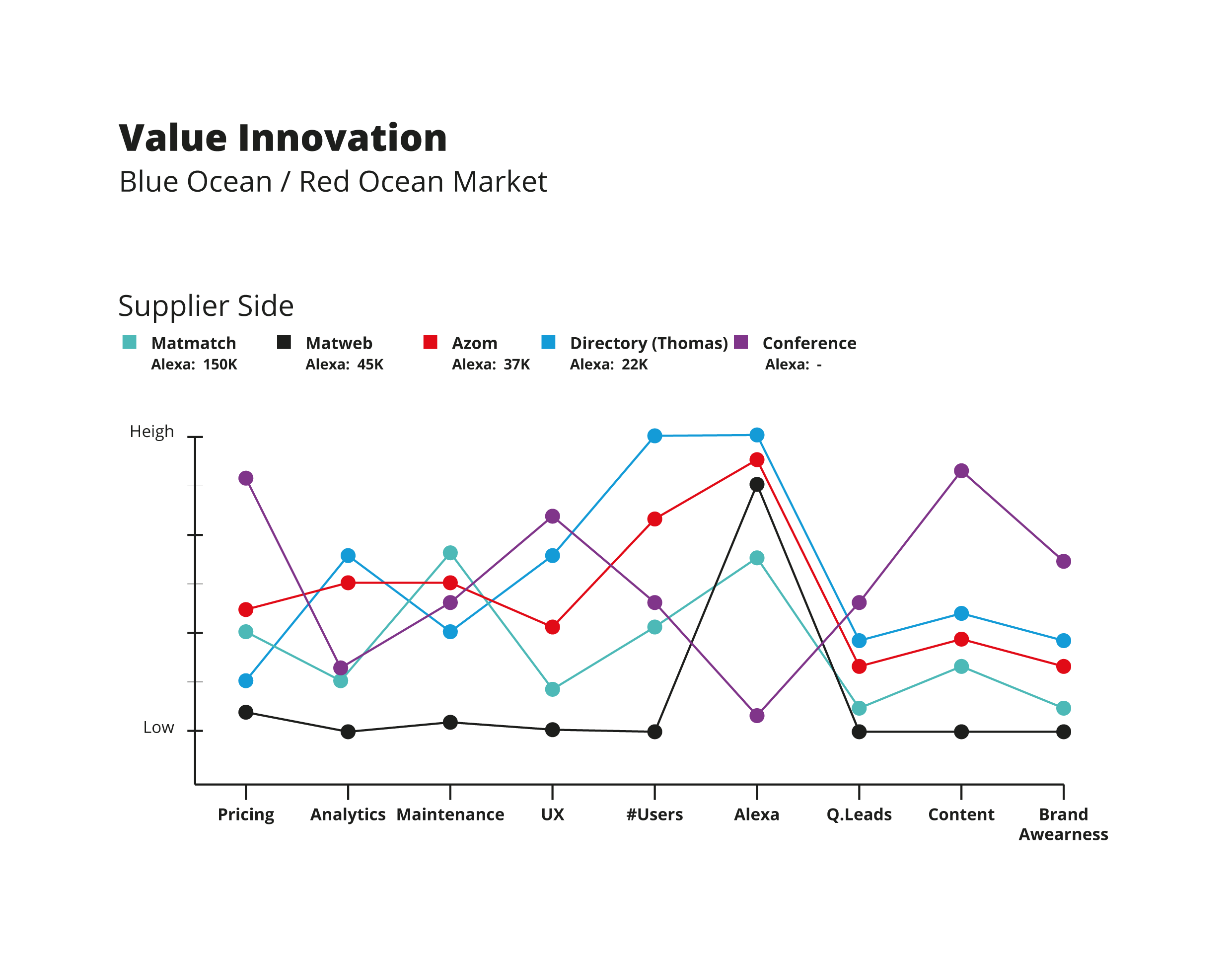
Blue Ocean strategy analysis:
Identifying where Matmatch could differentiate by focusing on underserved needs instead of competing in crowded market segments.
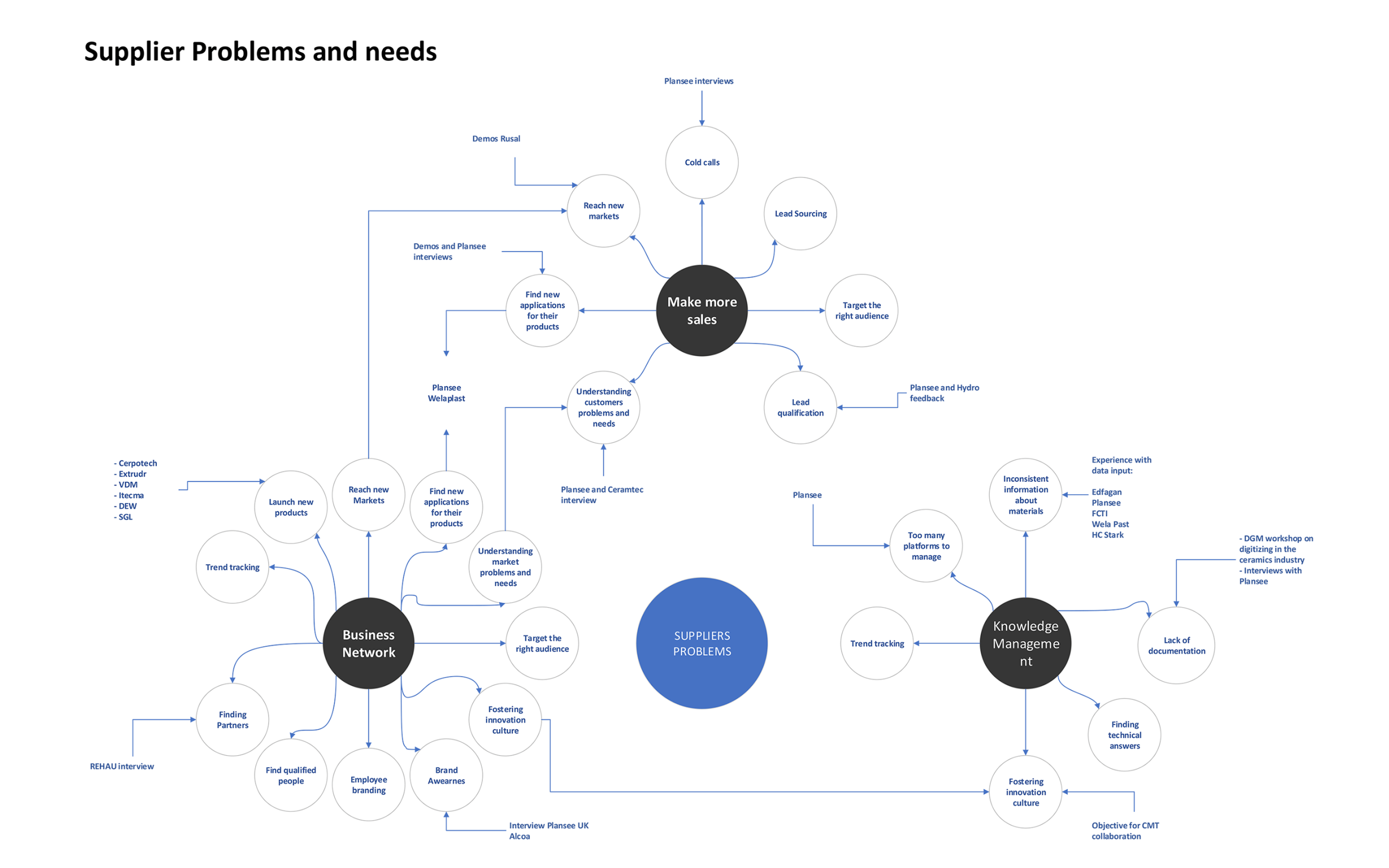
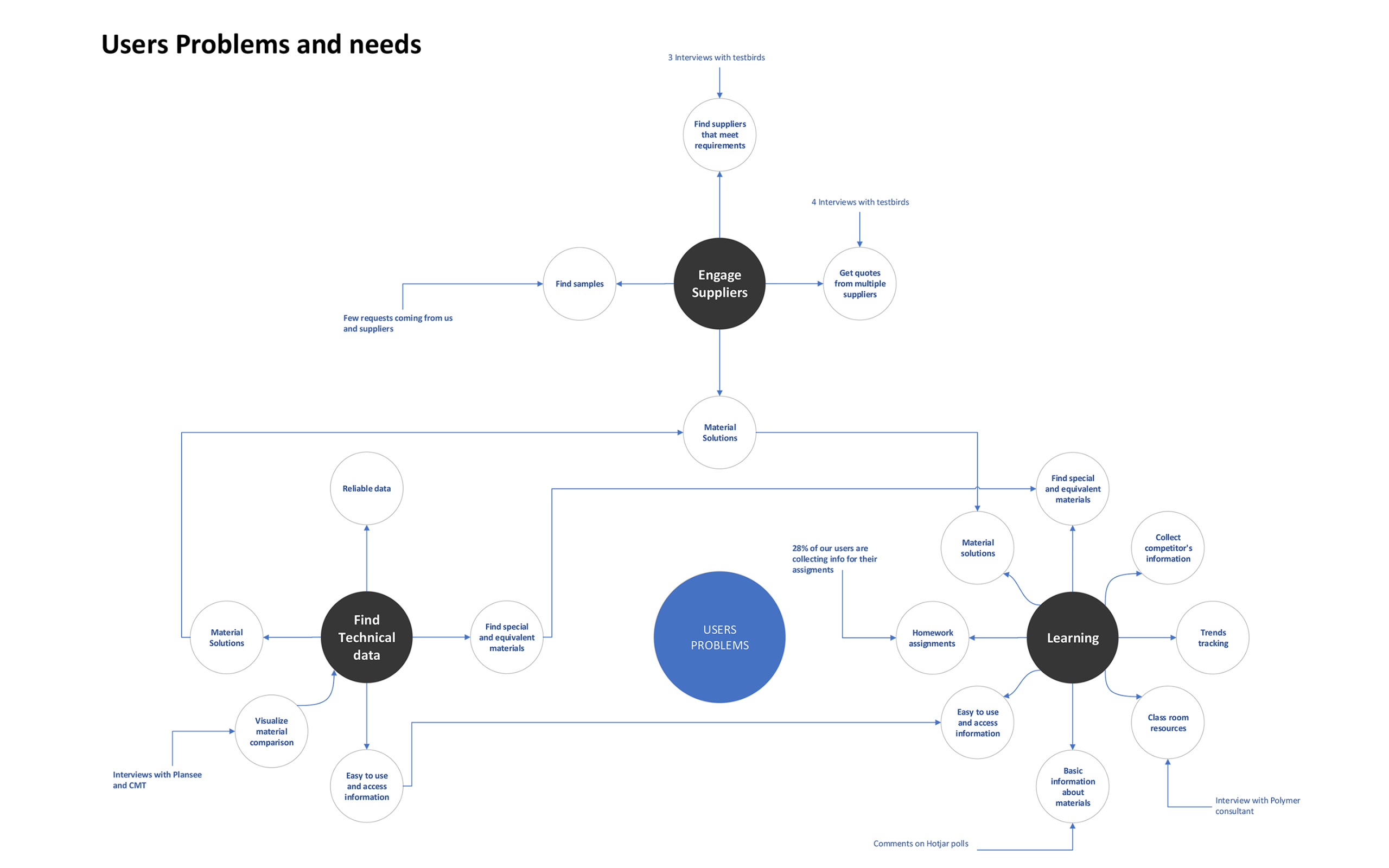
Service blueprints:
Mapping out the complexity of our ecosystem to reveal where the platform could create the most value across multiple touchpoints.
Blueprints were instrumental so that leadership could clearly visualize the end-to-end experience—how users interacted with Matmatch, where friction occurred, and where strategic opportunities existed or were lost. This visibility became the foundation for the next phase of transformation.
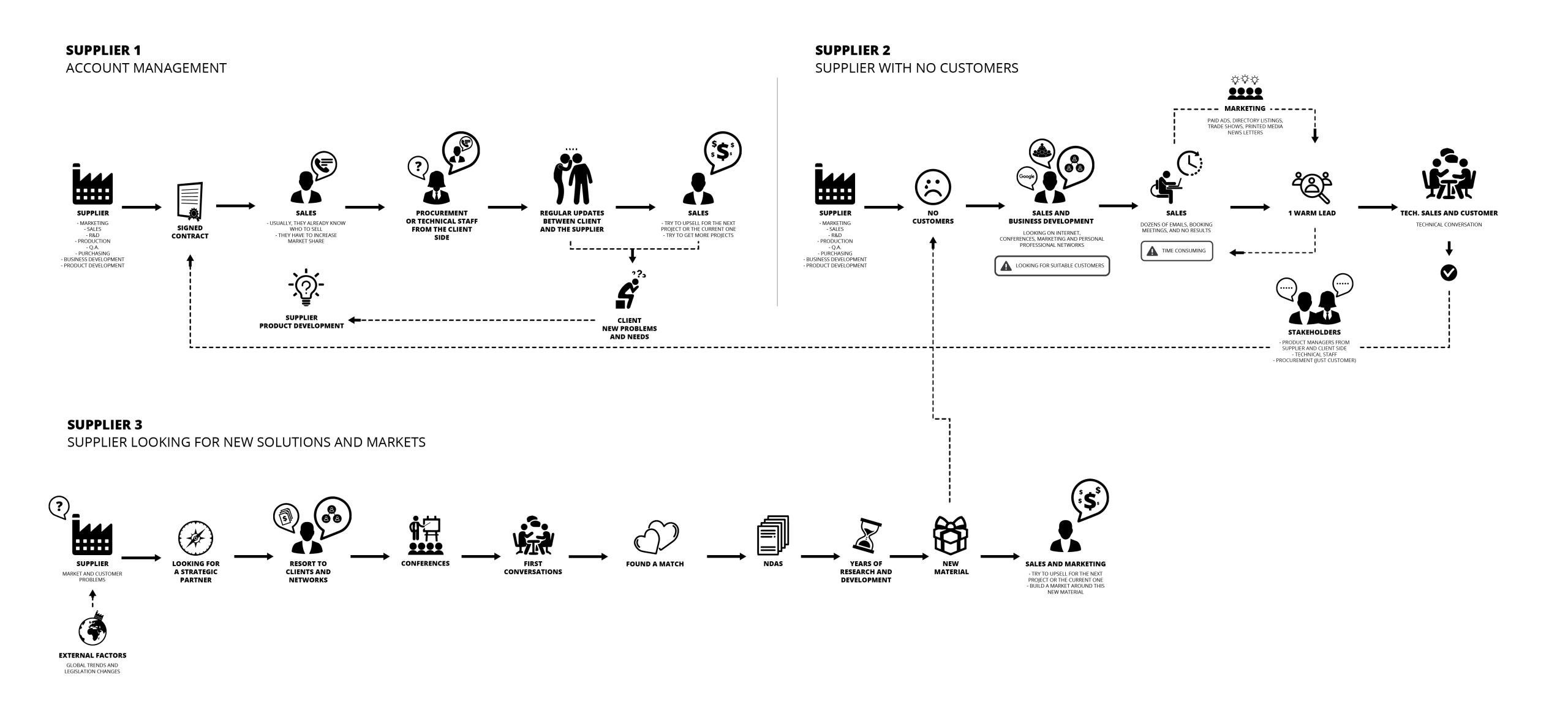
Journey Mapping:
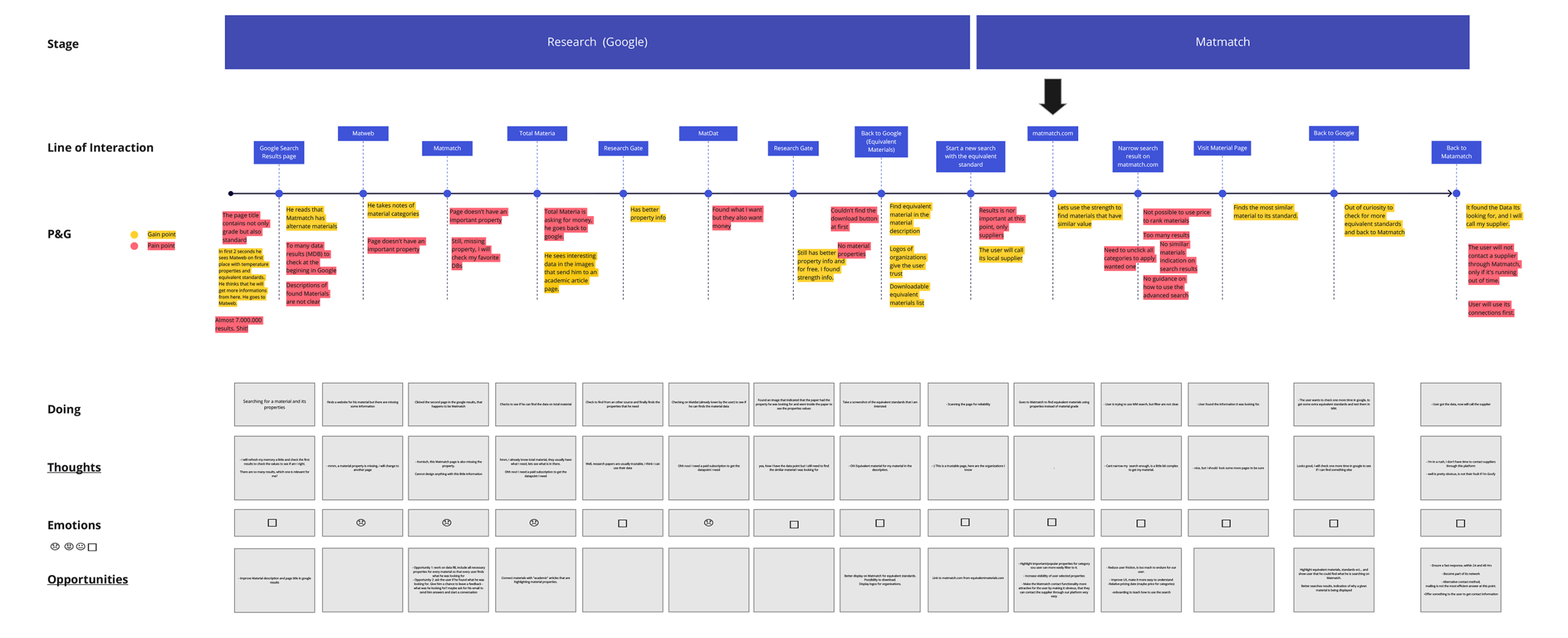
At this stage, we didn’t yet have enough data to build a full user journey map, but we used lightweight journey-mapping exercises to identify early touchpoints where the product could deliver tangible value and helped the teams spot high-impact opportunities.

DESIGN SPRINTS
These first steps brought visibility of user research across the company to create buy-in.
We tested multiple approaches—from conversational interfaces to step-based navigation systems—to validate assumptions about how engineers searched for and evaluated materials.
SPRINT 1
Early testing revealed that users, while appreciating the cleaner design and desktop-like layout, valued clarity, control, and data accuracy more than visual novelty.
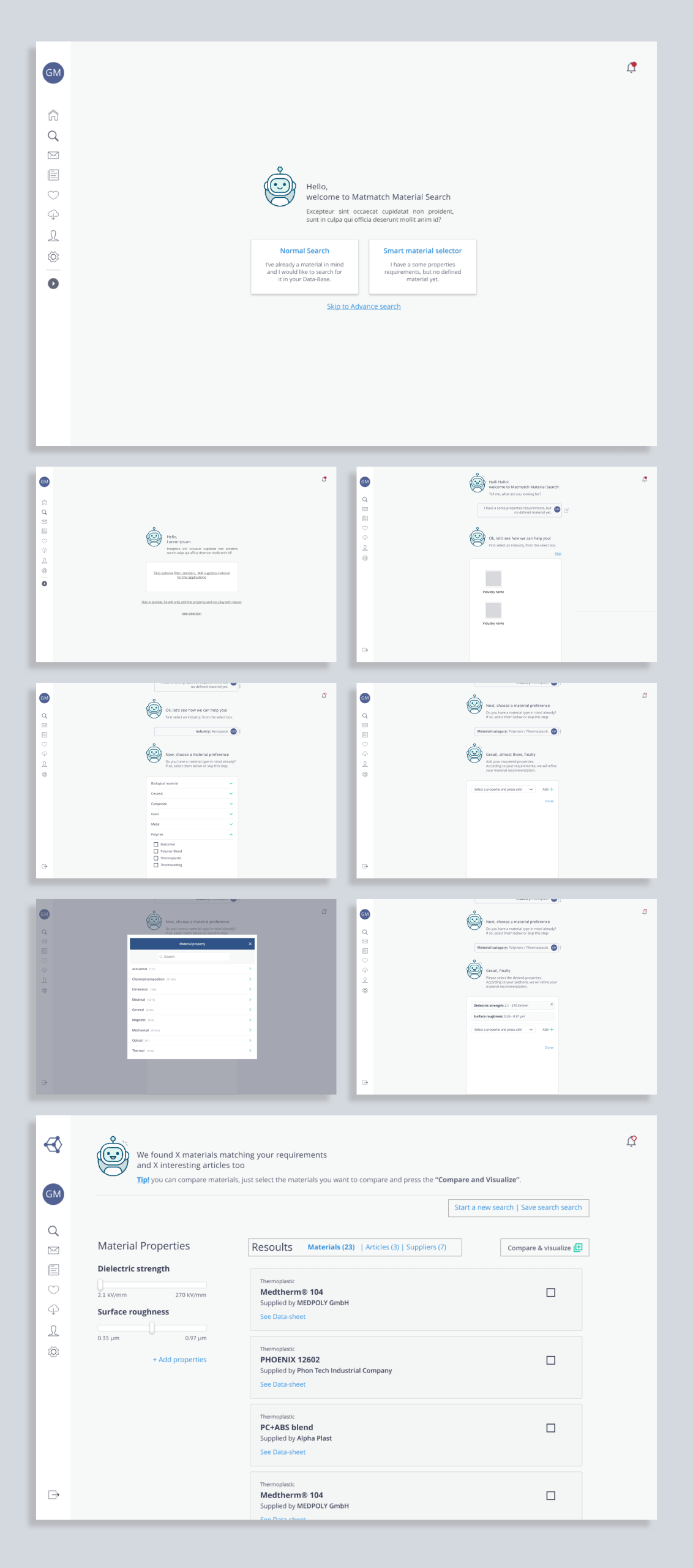
The testing taught us that efficiency and logic—not aesthetics—were the real drivers of trust in the product.
SPRINT 2
Due to technical limitations, we moved from a conversational UI to a step-based navigation model that gave users more control and transparency in their searches.
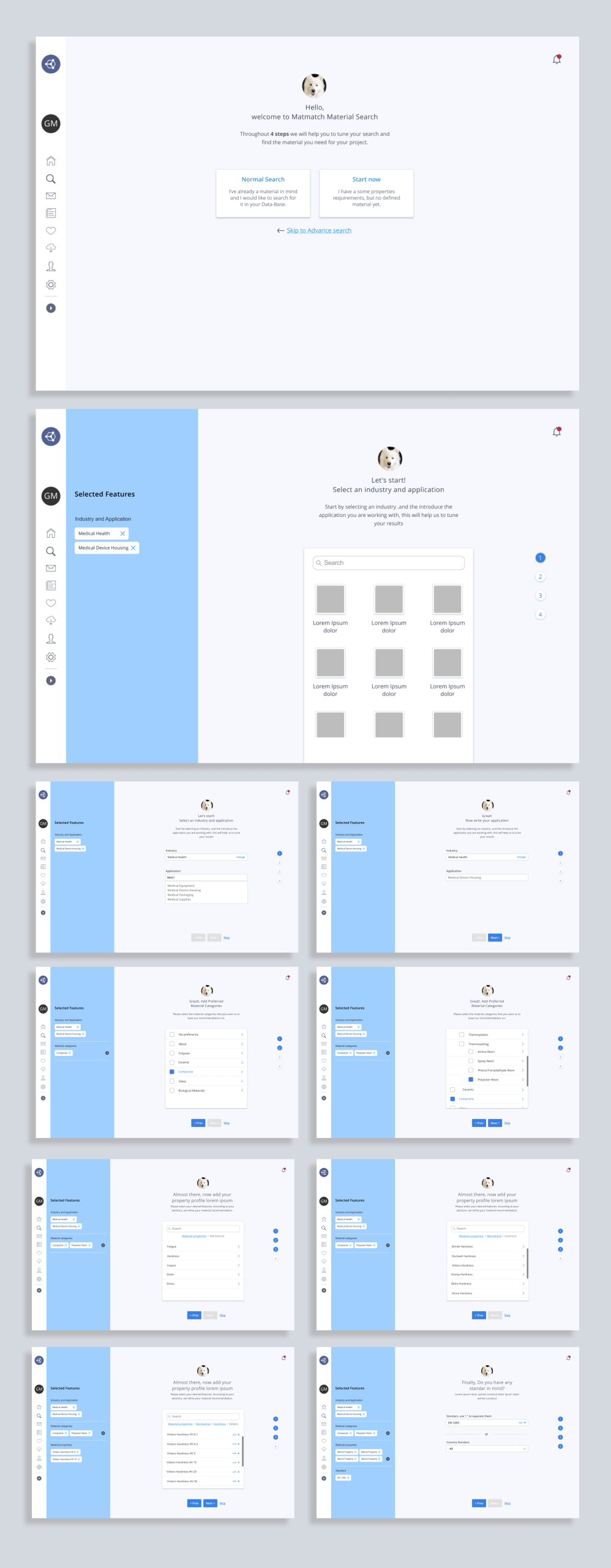
As prototype fidelity increased, we confirmed that users wanted to guide the process themselves but still questioned the accuracy of the results, pointing to the need for greater confidence in the data model and sourcing.
SPRINT 3
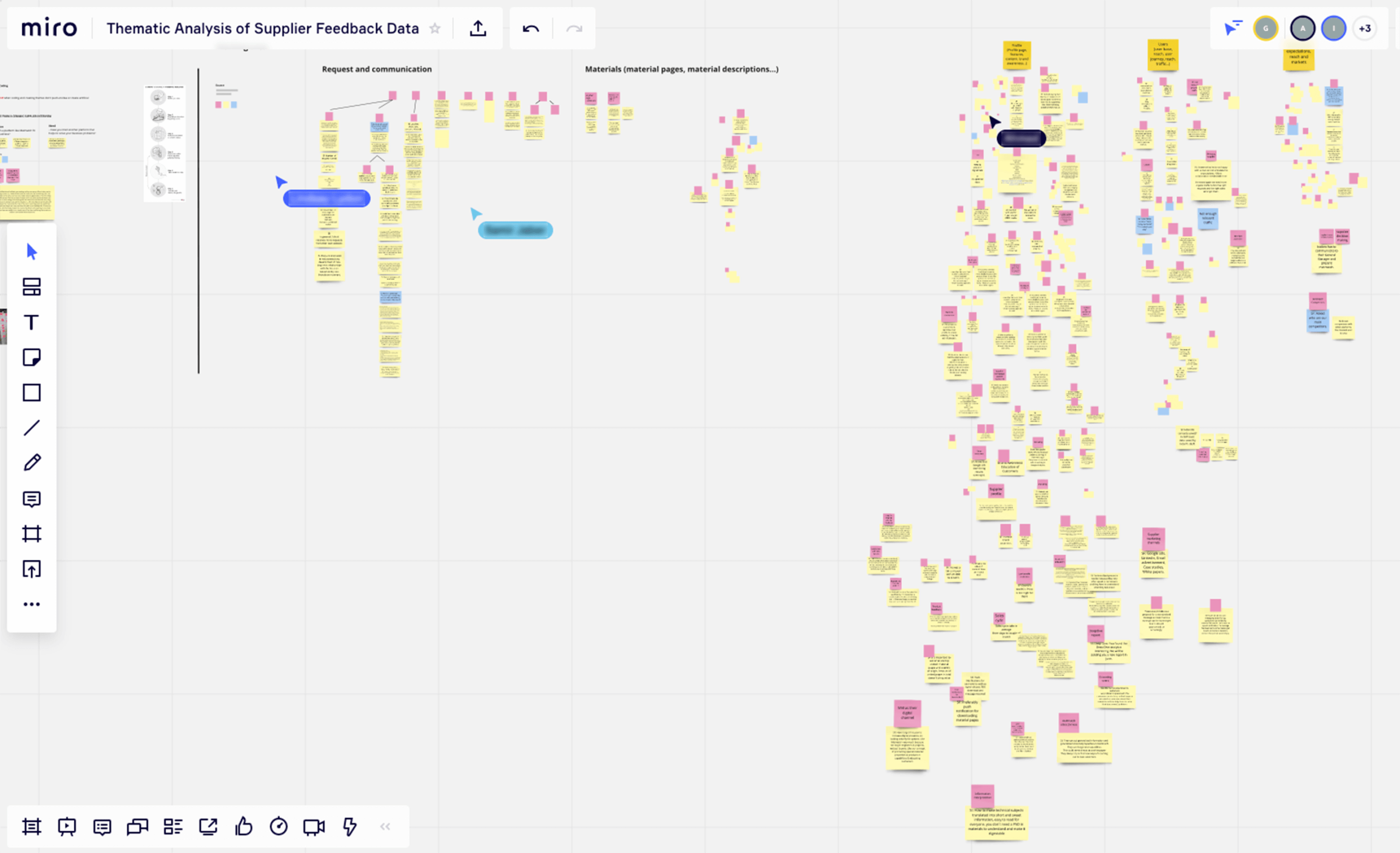
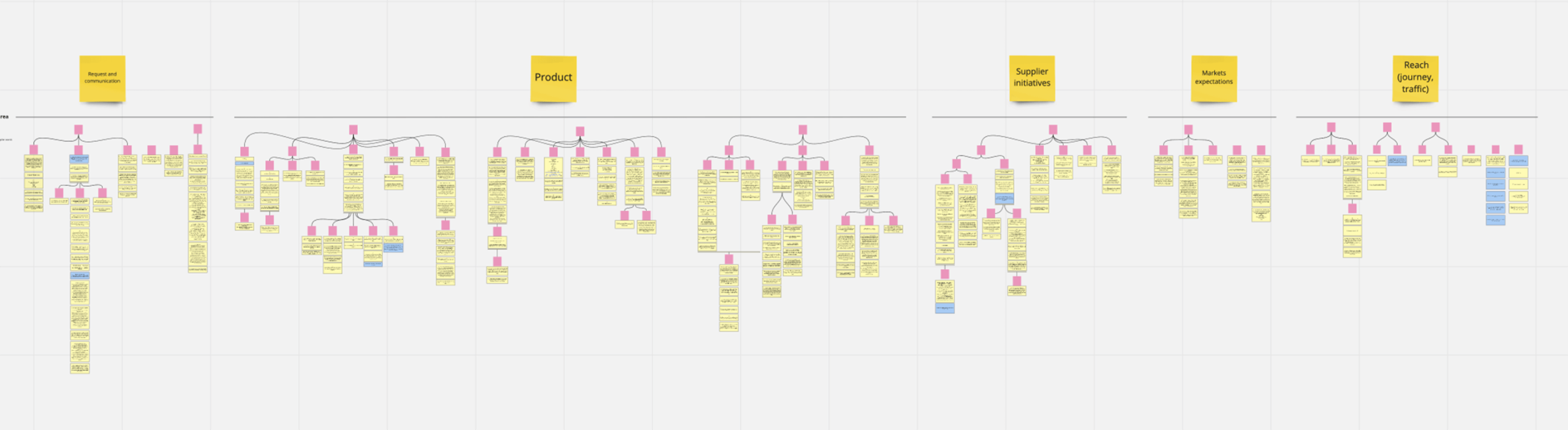
Before the third sprint, we consolidated insights scattered across departments—sales, marketing, and support—to build a unified understanding of our users.
By analyzing recurring themes in this qualitative data, we identified patterns in user needs, motivations, and behaviors that had previously gone unnoticed.
This synthesis not only informed our next round of design experiments but also aligned the organization around a single, evidence-driven view of our customer.
The breakthrough came when we redefined the search results page to mirror how engineers actually think: structured, schematic, and efficient.
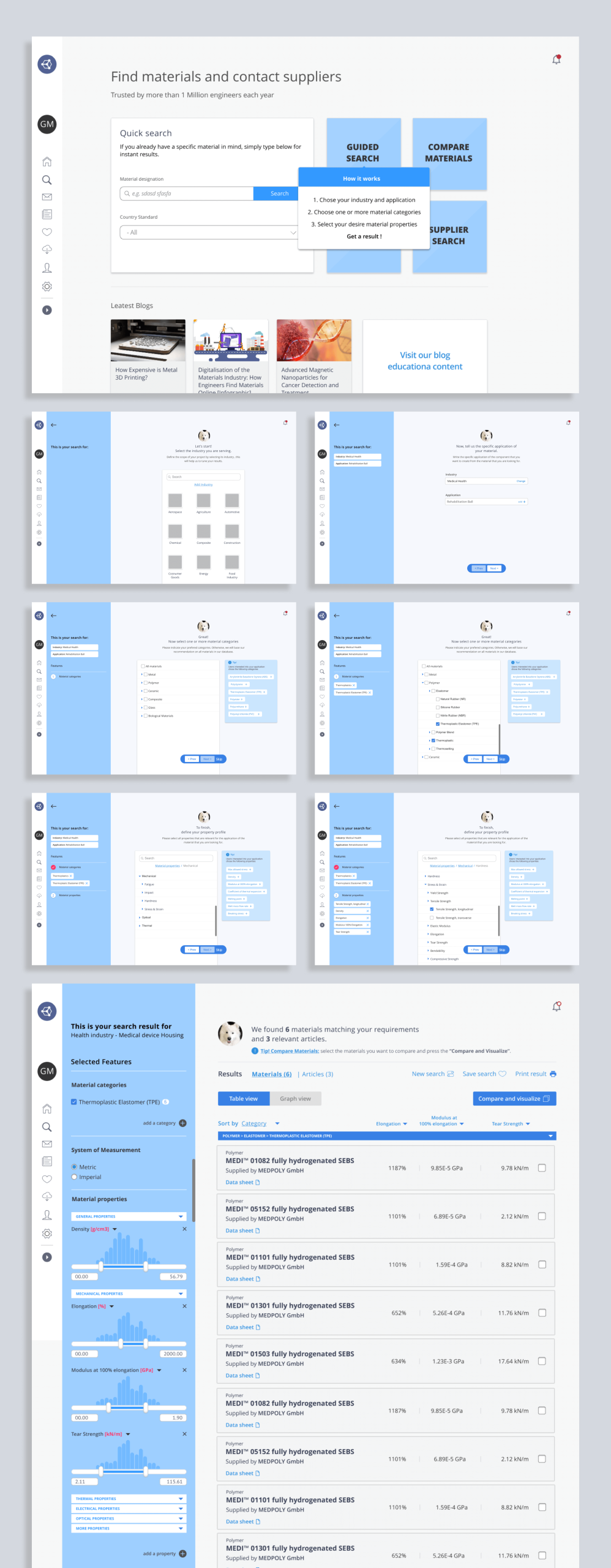
The new approach resonated deeply—users described it as “a tool we could use and share with colleagues.”
This sprint validated our hypothesis that success would come not from novelty, but from precision and usability. It set the foundation for a redesigned search experience that balanced functional depth with cognitive simplicity.
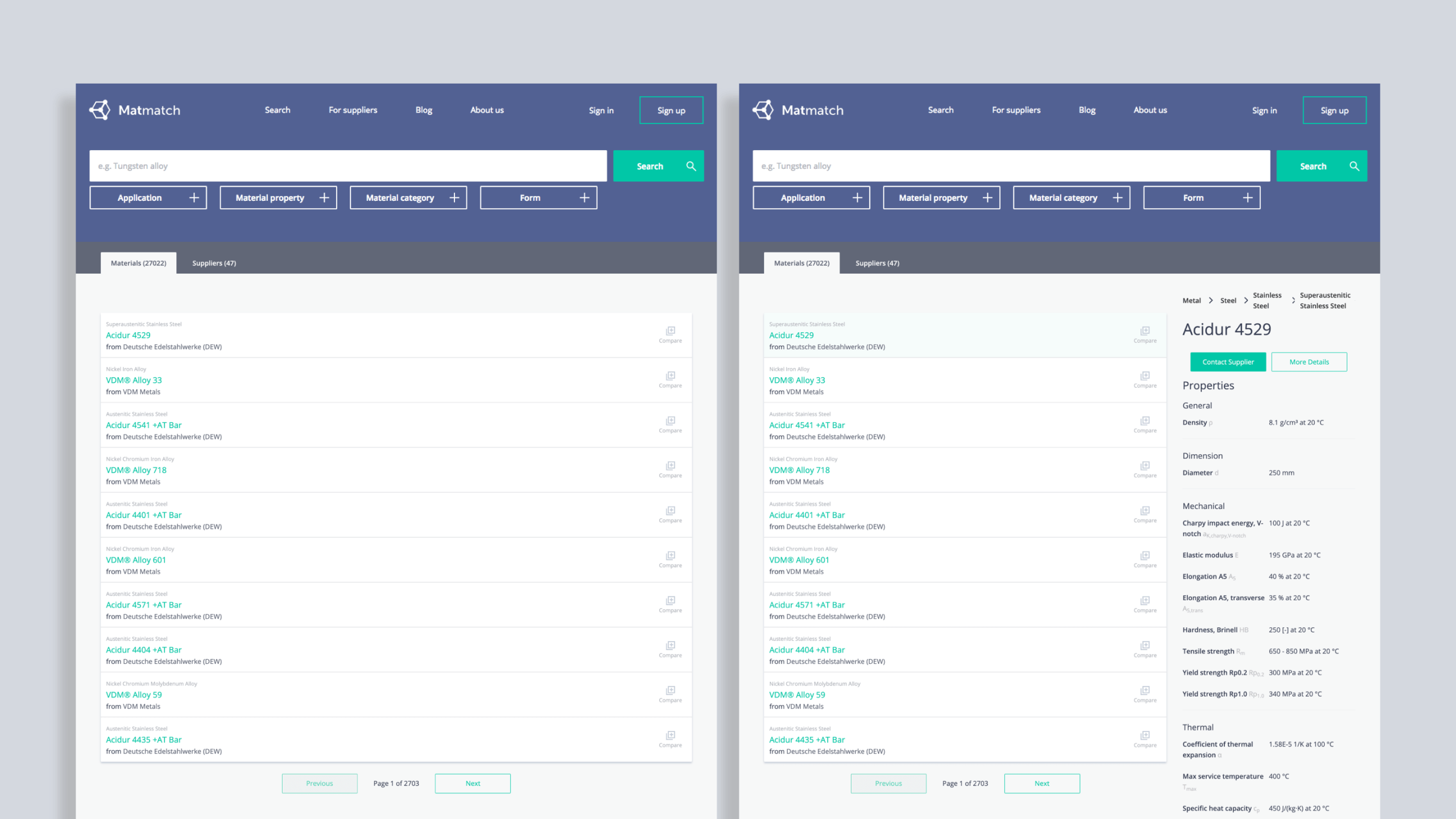
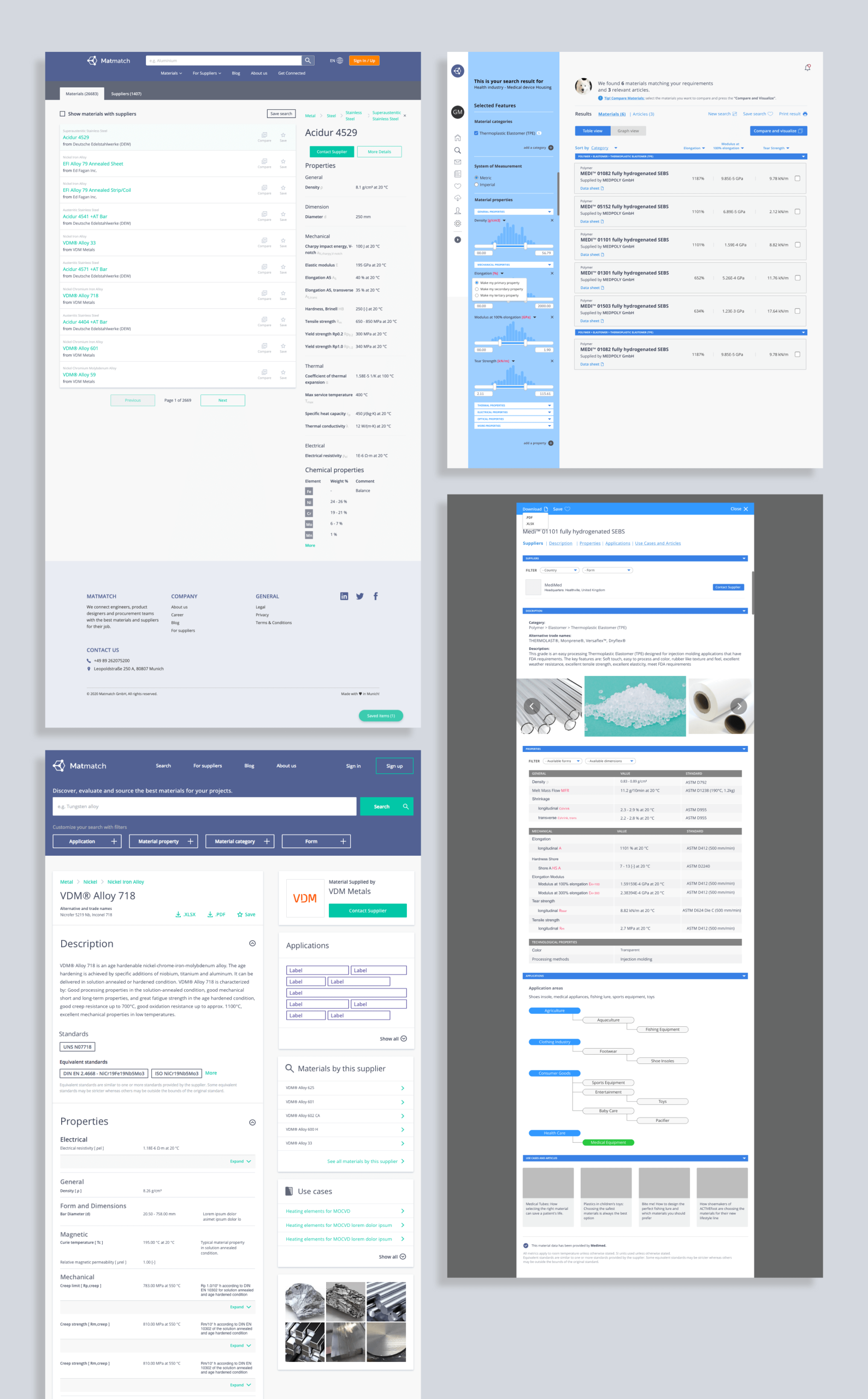
SPRINT 4 “OLD VS NEW”
To confirm our direction, we ran an A/B comparison between the legacy search experience and the new design. The results were decisive, and this gave management the confidence to move forward with the new implementation.
SPRINT 5 “COMPARE MATERIALS APPLICATION”
The final sprint focused on testing new features—an underused but high-potential capability, as user interviews revealed that engineers relied heavily on numerical data but struggled to communicate it effectively to non-technical stakeholders such as procurement or management.
“As an engineer is easy for me to understand the numerical data. However, when it comes to present this data or share it with others for decision-making processes, for example, management or procurement we need something more friendly and easy to understand, like charts for example.”
– User interview
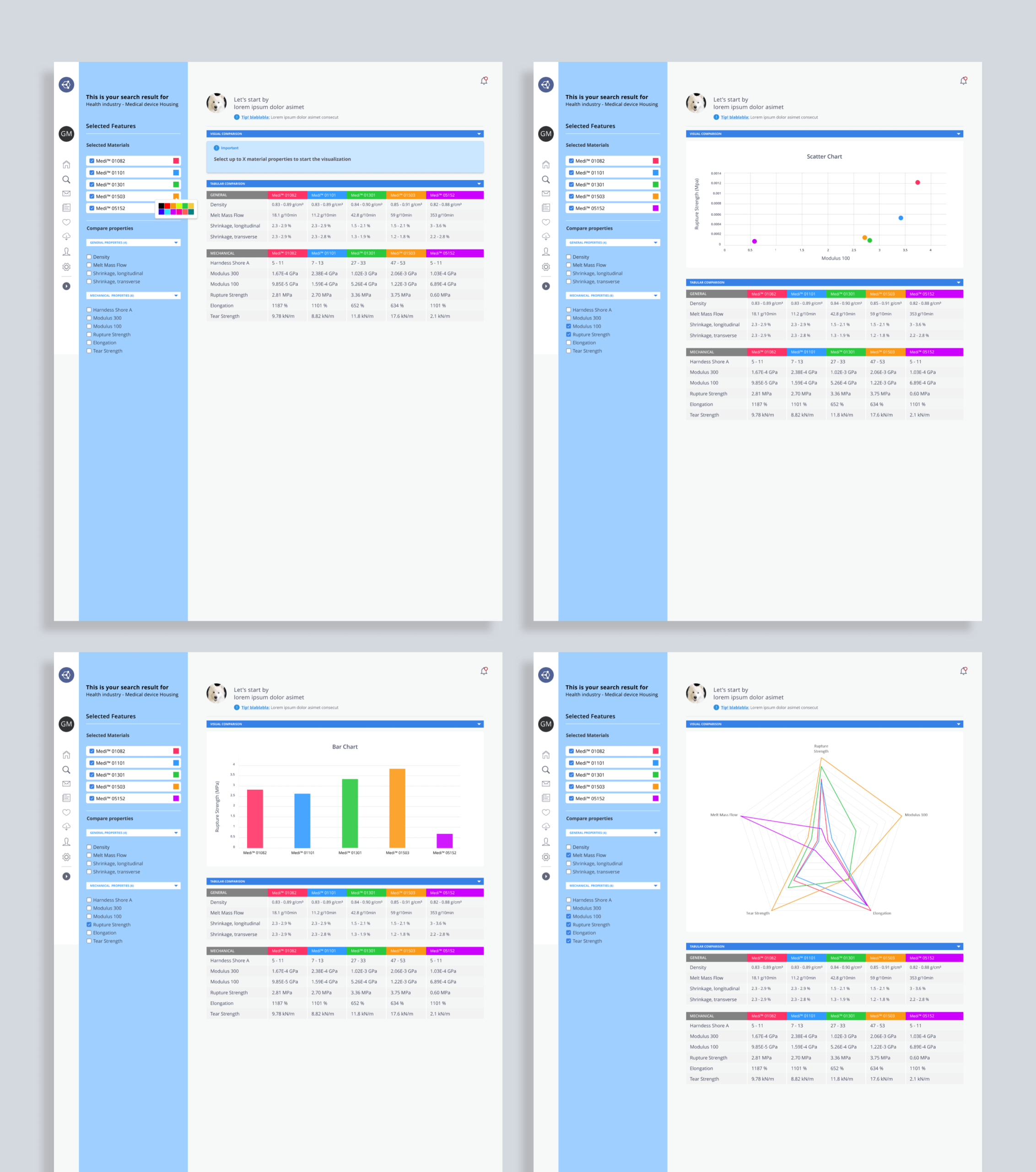
This sprint expanded Matmatch’s value proposition from a search tool to a decision-support platform, addressing both the technical and communication needs of its user base.
Consolidating Insights and Preparing for Execution
By the end of the quarter, our discovery and validation work had produced tangible outcomes:
30+
User interviews
100+
Exploratory wireframes
5
Design sprints
5
Usability reports
These deliverables didn’t just validate concepts—they established confidence, direction, and a framework for continuous, evidence-based iteration.
From UX to Product Systems: Building the Foundation for Scale
With validated concepts in hand, I shifted focus to systematizing design that allowed developers to build faster and more consistently. High-fidelity screens followed, informed by user feedback.
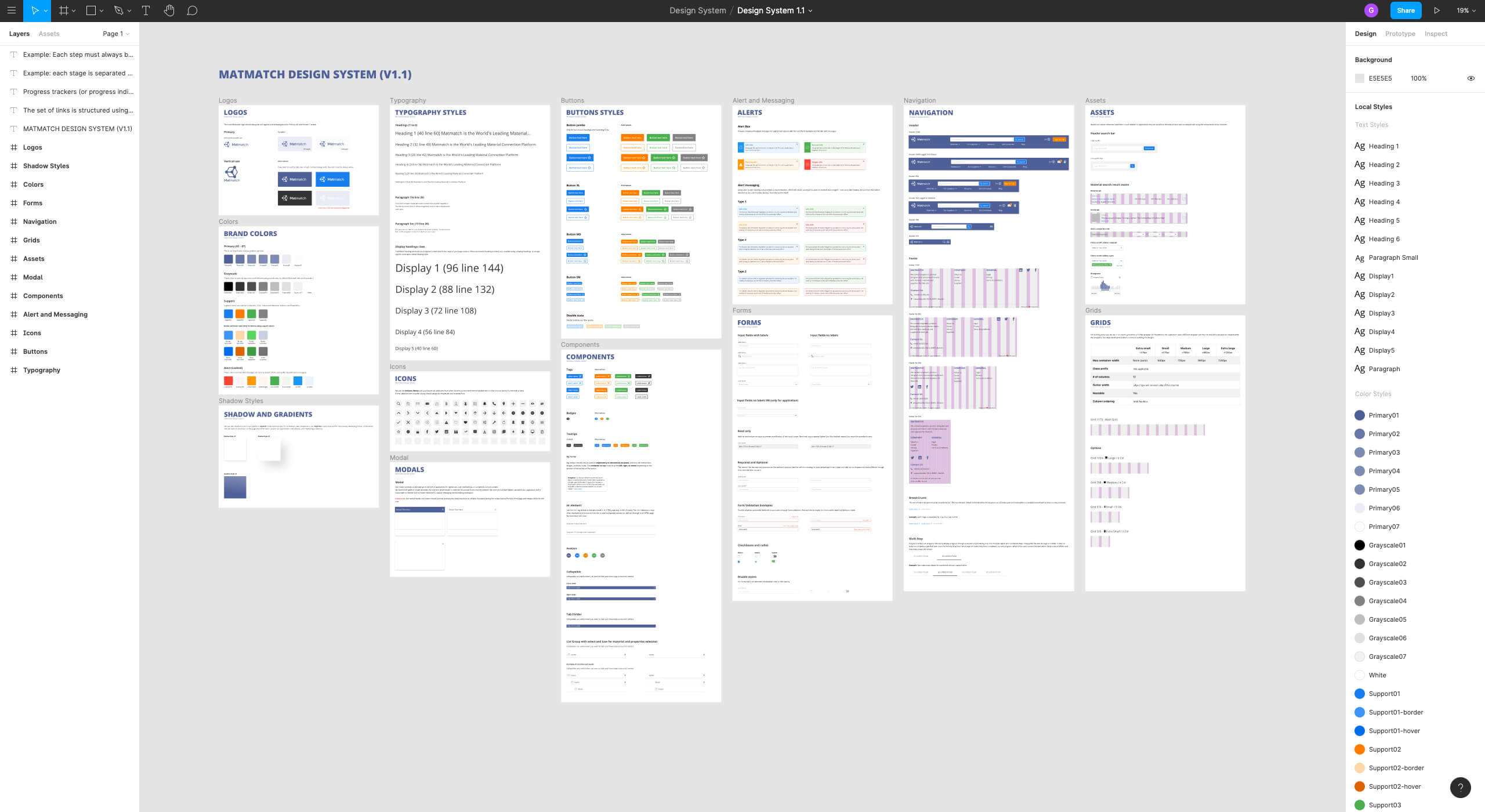
I documented and rolled out a Design System and UI guidelines tailored to dev team capabilities, which accelerated implementation and improved consistency.
The reimagined search engine became the centerpiece of this new direction: simple, powerful, and designed to work seamlessly across devices. It balanced usability with business outcomes by improving discoverability while driving qualified leads to supplier data sheets.
HIGH FIDELITY SCREENS
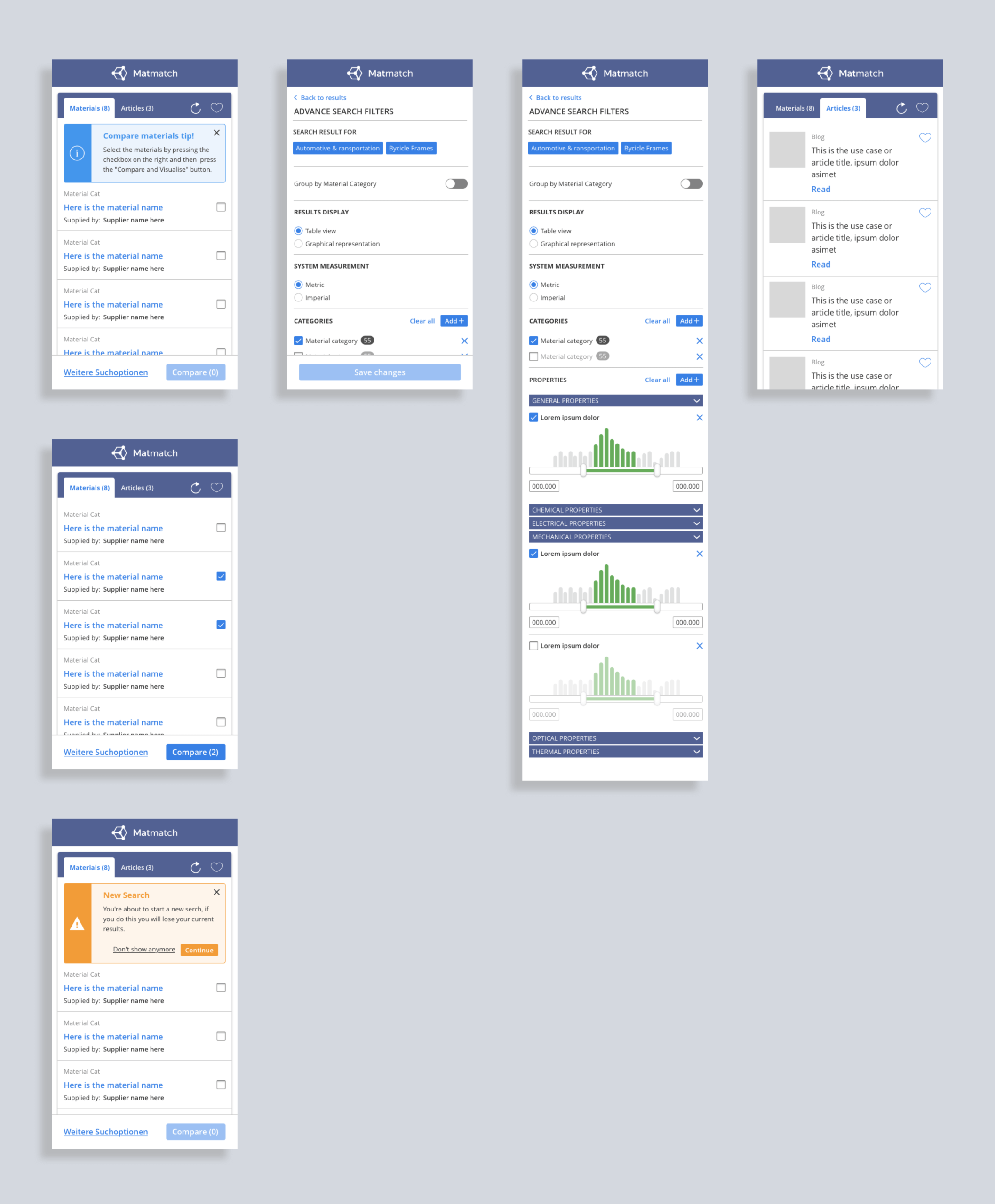
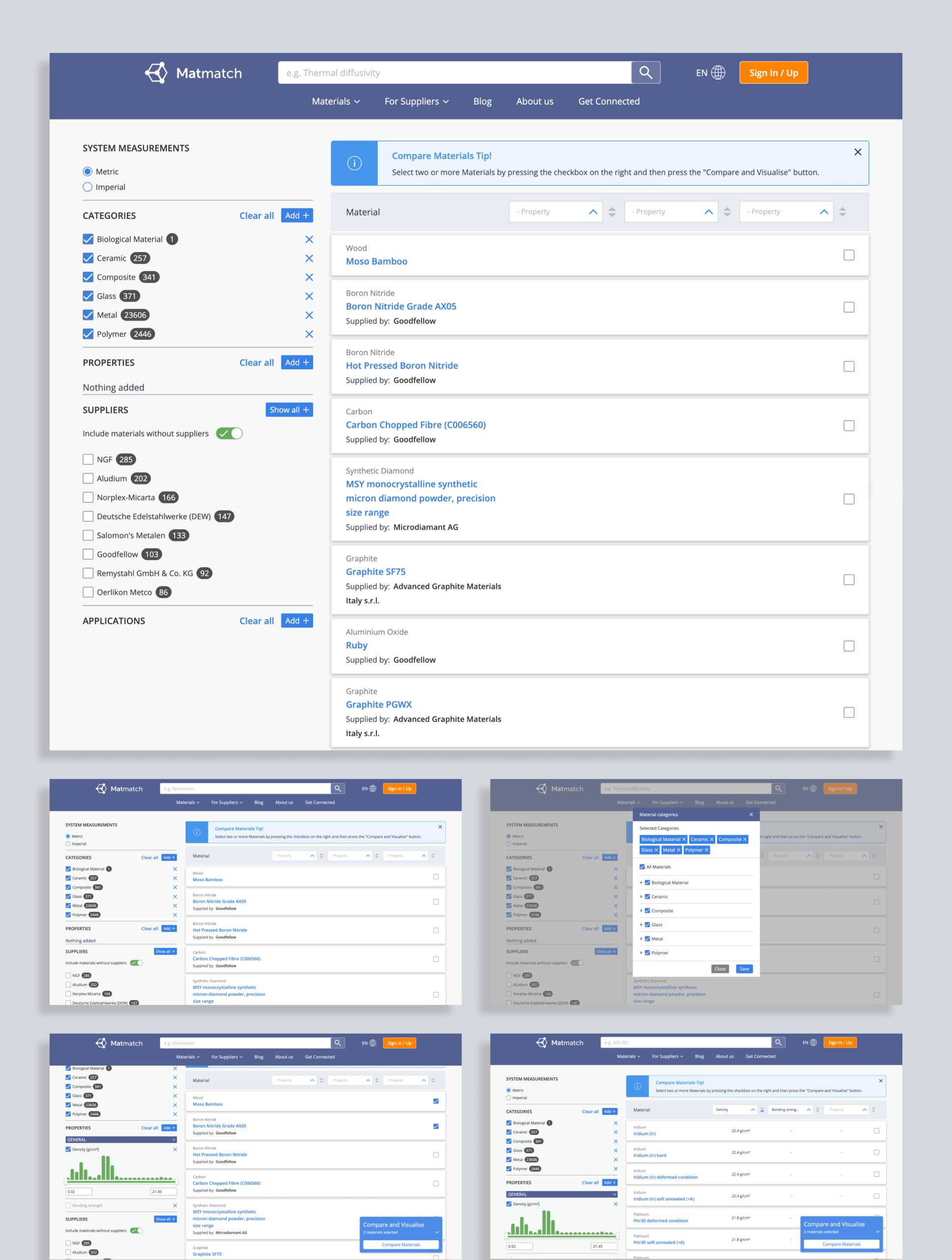
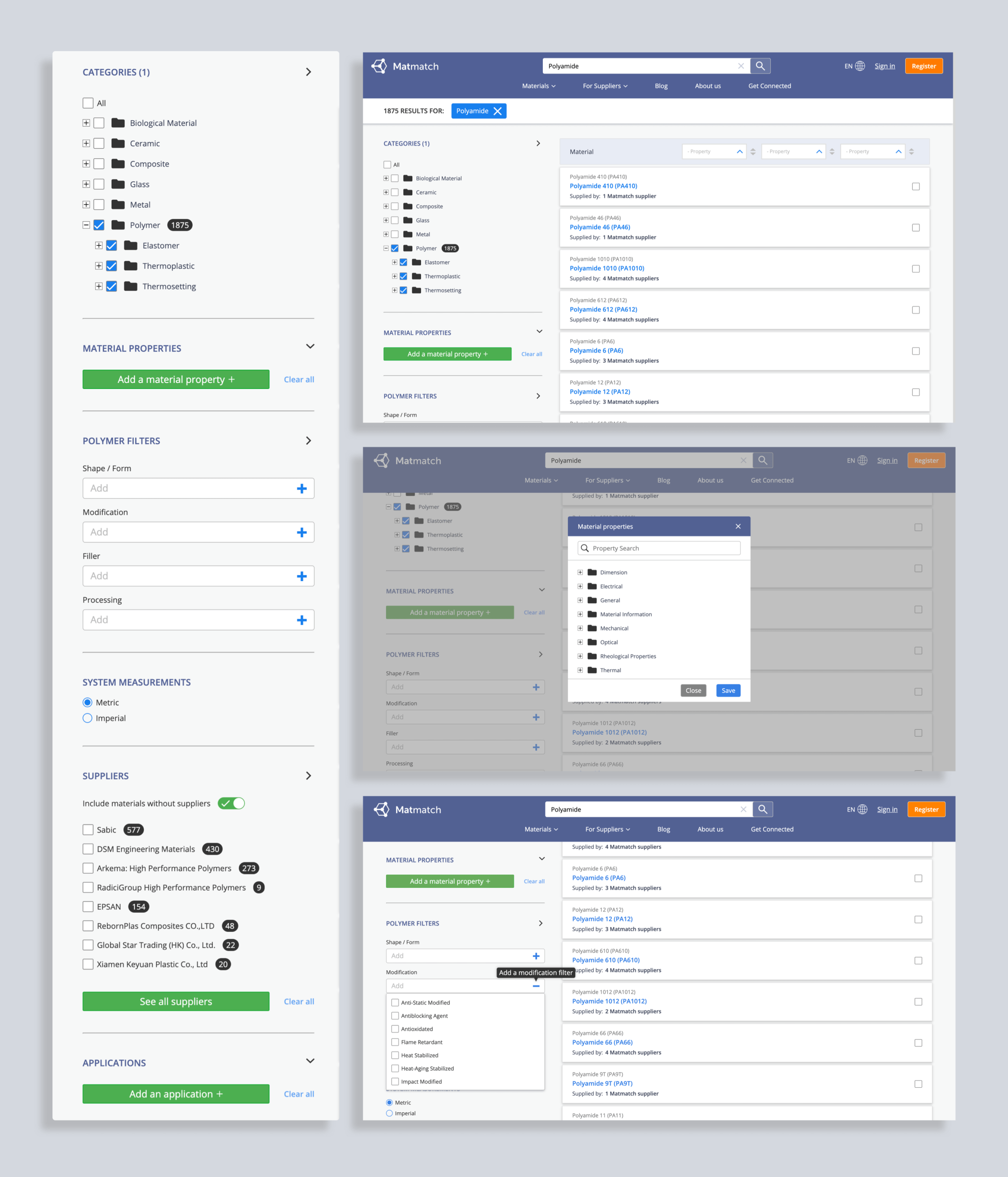
When moving from prototypes to production, we focused on what mattered most—clear navigation, meaningful control over results, and a smooth, responsive experience.
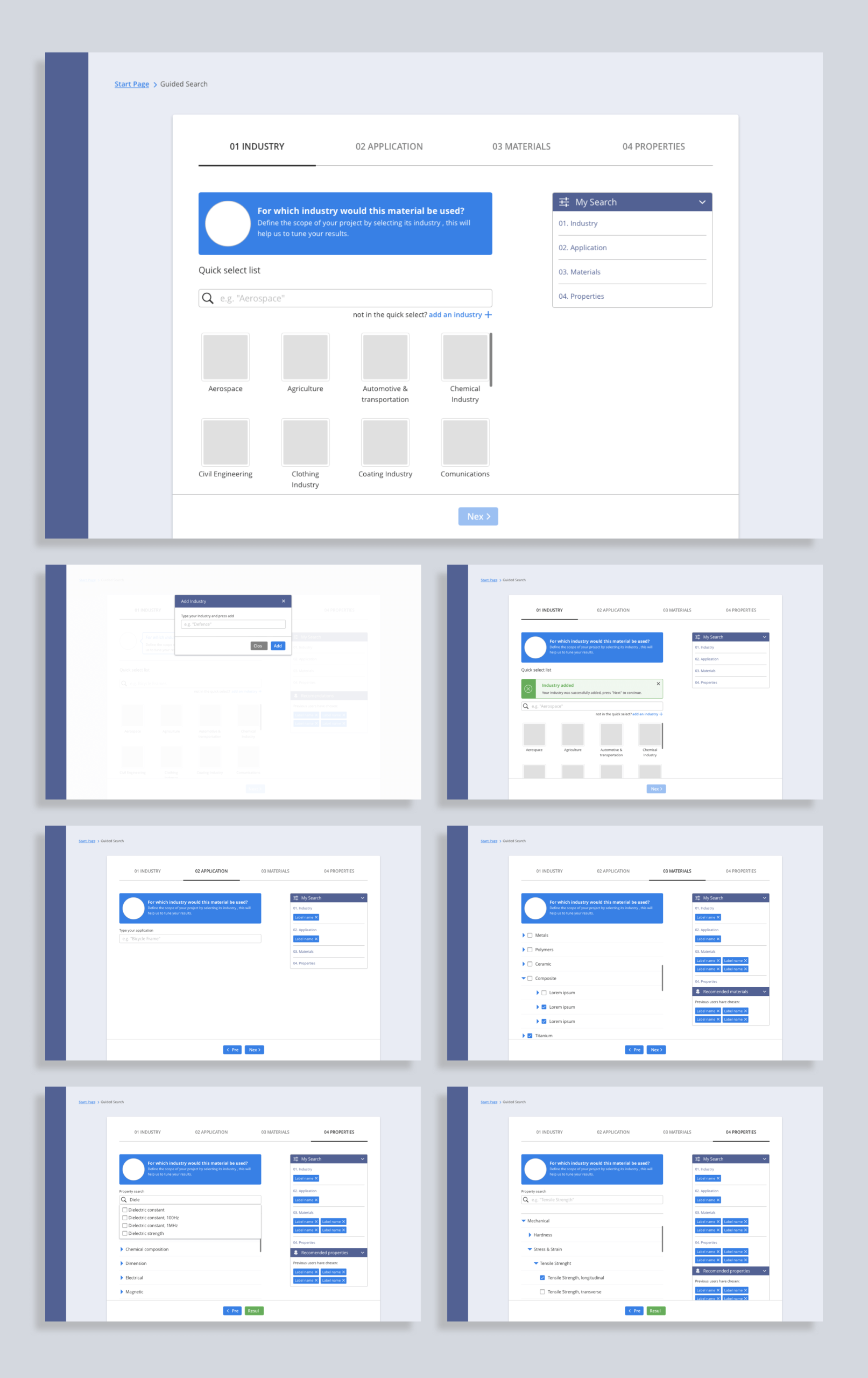
Our approach emphasized simplicity and performance, especially given the data-heavy workflows and the platform’s mobile limitations.
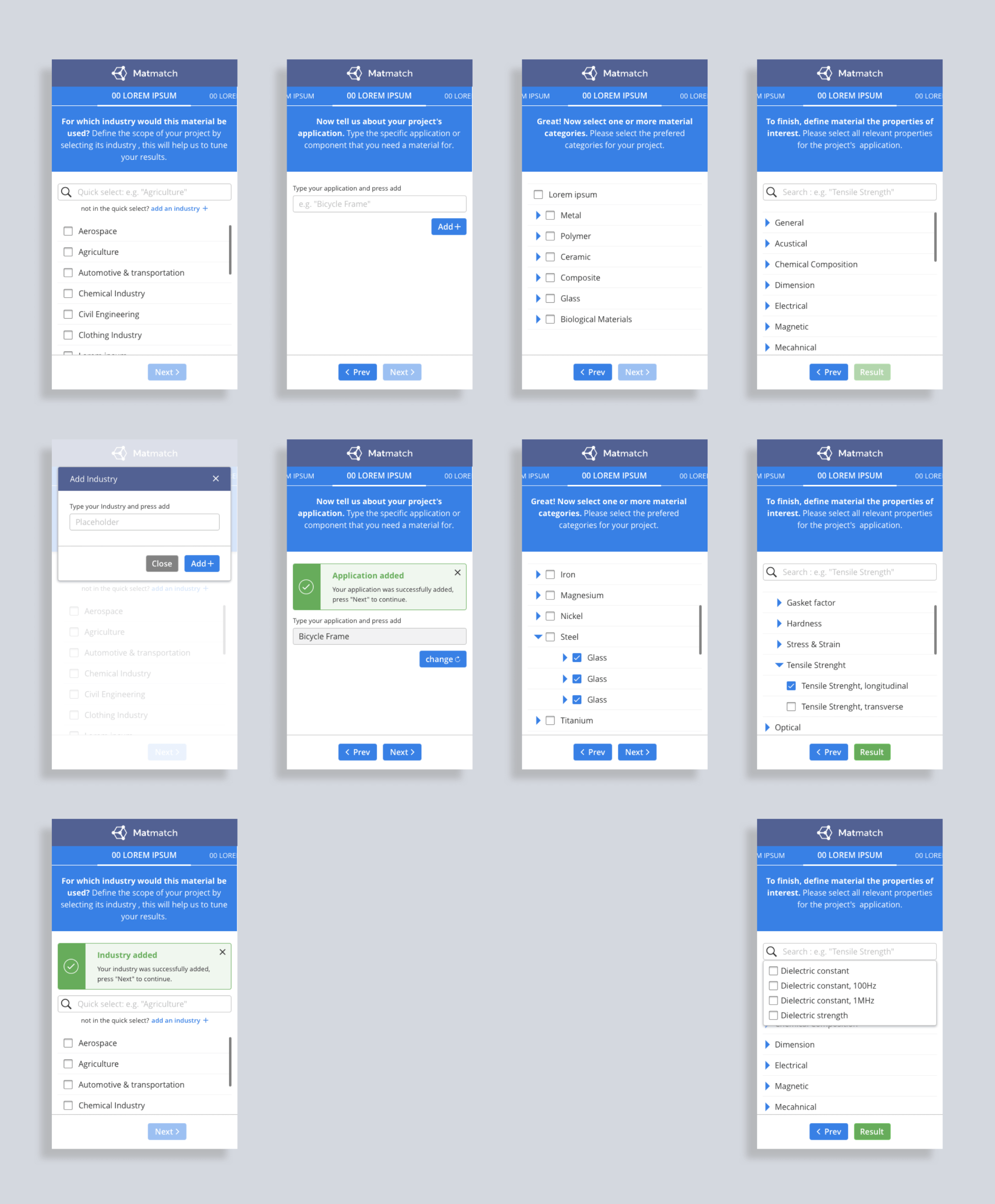
Together with the Product Manager and engineering leads, we prioritized by impact and feasibility. This approach allowed us to deliver immediate value while laying the groundwork for long-term scalability.
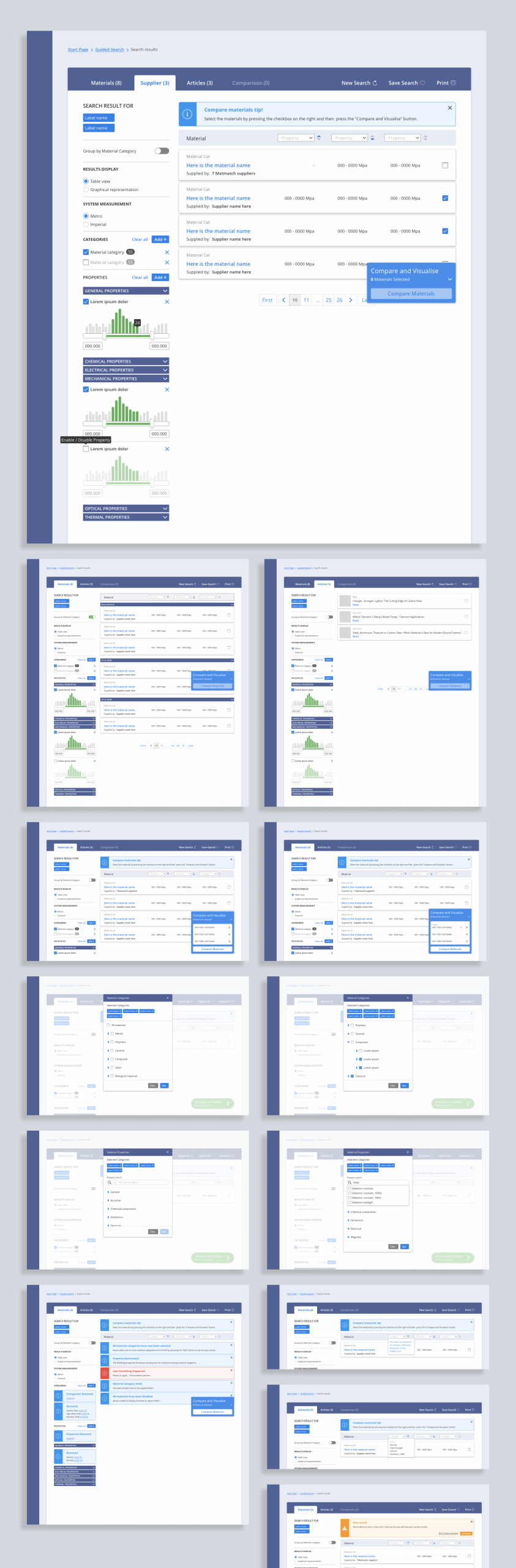
This shift transformed the design function into a strategic enabler—accelerating implementation, reducing inconsistency, and improving usability—ultimately strengthening Matmatch’s credibility with its user base.
Release: Mistakes, Concessions, and Trade-offs
As with any major release, time constraints and technical dependencies required difficult trade-offs. While we successfully delivered a more powerful search experience, user feedback revealed several areas where execution fell short of our design intent.
Interface Density and Visual Clarity
Due to partial implementation of UI guidelines, the final release lacked adequate spacing and hierarchy, making it harder for users to identify key actions at a glance.
Change Blindness
Because micro-interactions and transitions were deprioritized for delivery speed, users occasionally struggled to understand when actions were being processed, creating a perception of latency or confusion.
Color and Accessibility
In pursuing a clean, schematic look, the excessive use of blue tones unintentionally reduced contrast for key actions, impacting visibility for color-blind users.
Learning curve:
The steepness of the learning curve did not reduce as expected after users tested the design multiple times, and was still above the standard curve of usability.
Use of language
The call to actions was not clear or descriptive enough for our users, a mismatch with their existing mental model.
These insights underscored a gap between the tested prototypes and the released version, driven by scope and time limitations. Instead of viewing this as a setback, we treated it as a learning cycle.
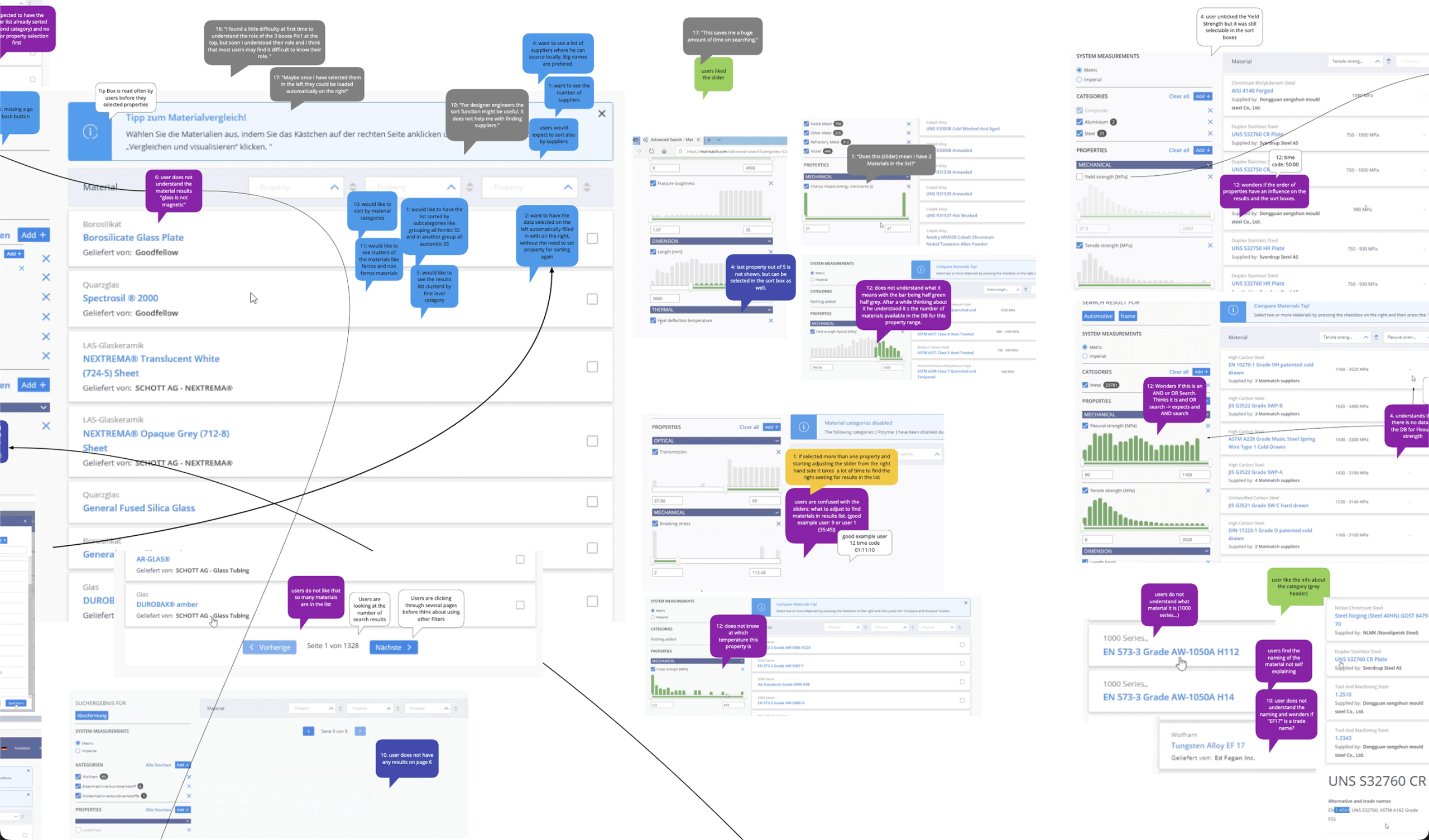
We systematically mapped each issue, prioritized them by user impact and business value, and integrated them into a continuous improvement roadmap. This approach ensured that every iteration moved us closer to delivering on the full vision of a user-centric, high-performing platform.
From Iteration to Growth
The continuous improvement cycle we initiated after release marked a turning point for Matmatch. Evidence that our changes were not just visual but deeply impactful to how users perceived and used the product.
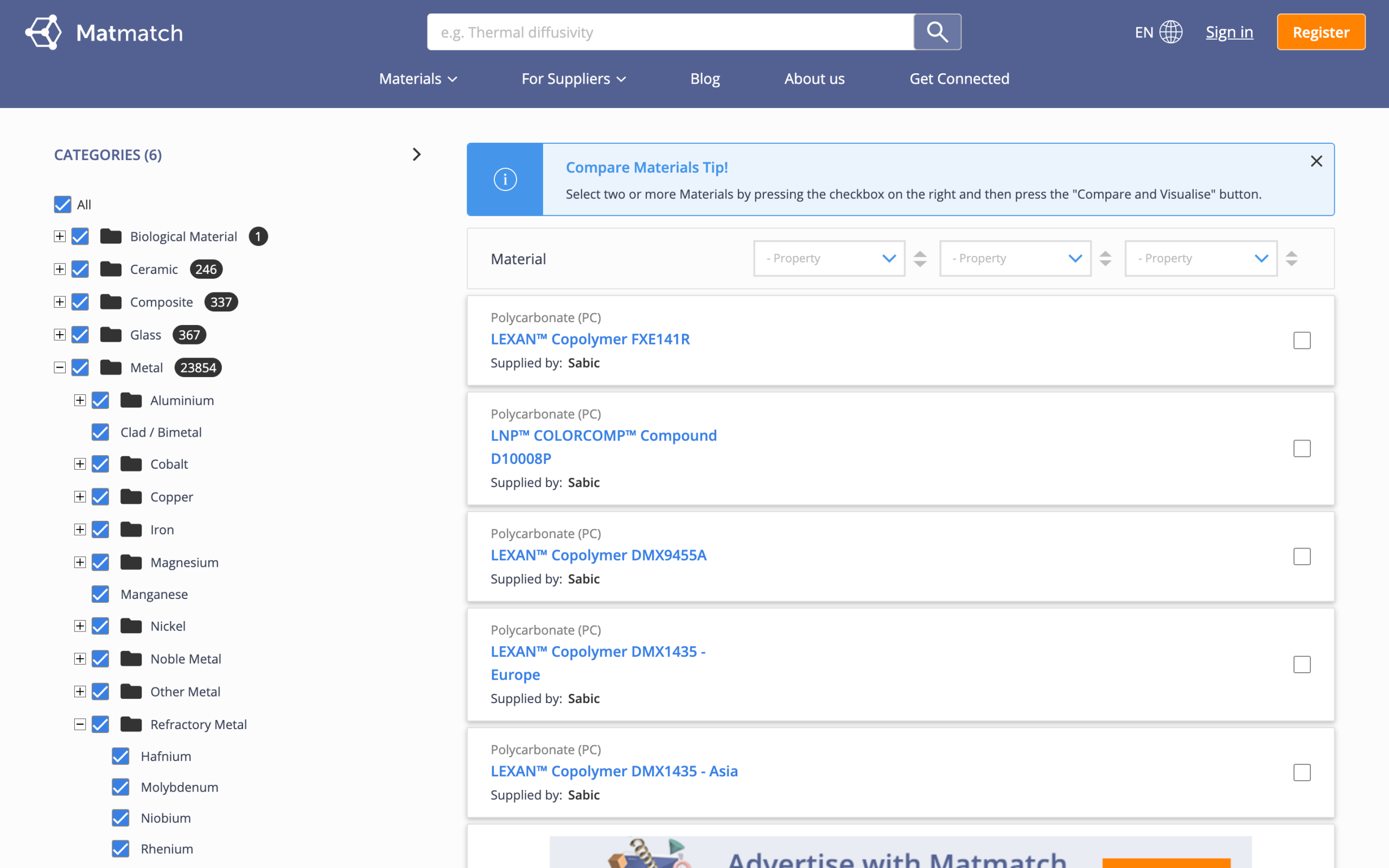
Systematic iteration
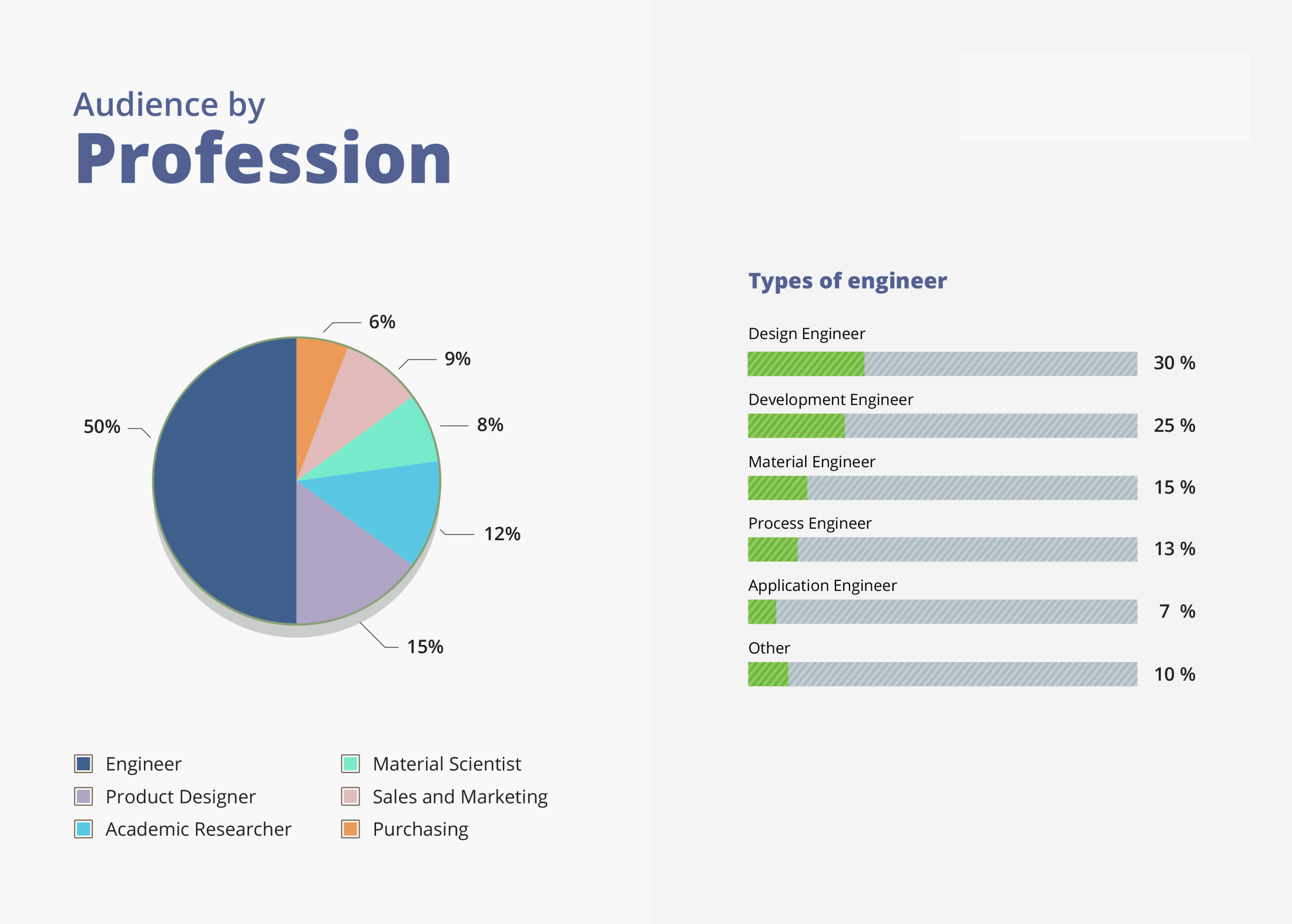
This growth also gave us the volume and quality of user interactions needed to formalize and refine our understanding of our audience.
Each release iteration improved usability and trust
Within a year, the platform reached over 10,000 daily visitors and nearly 2 million annual sessions.
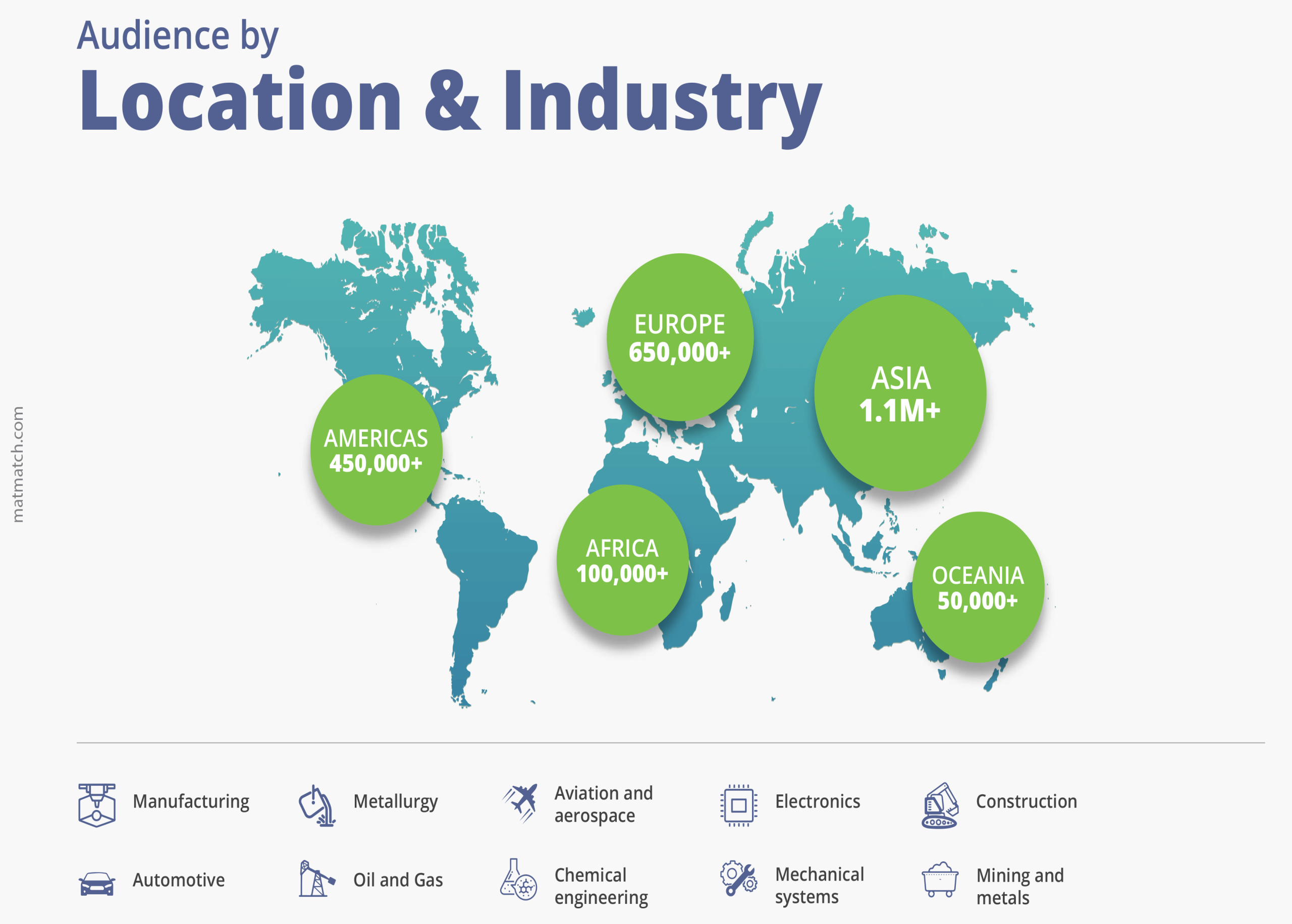
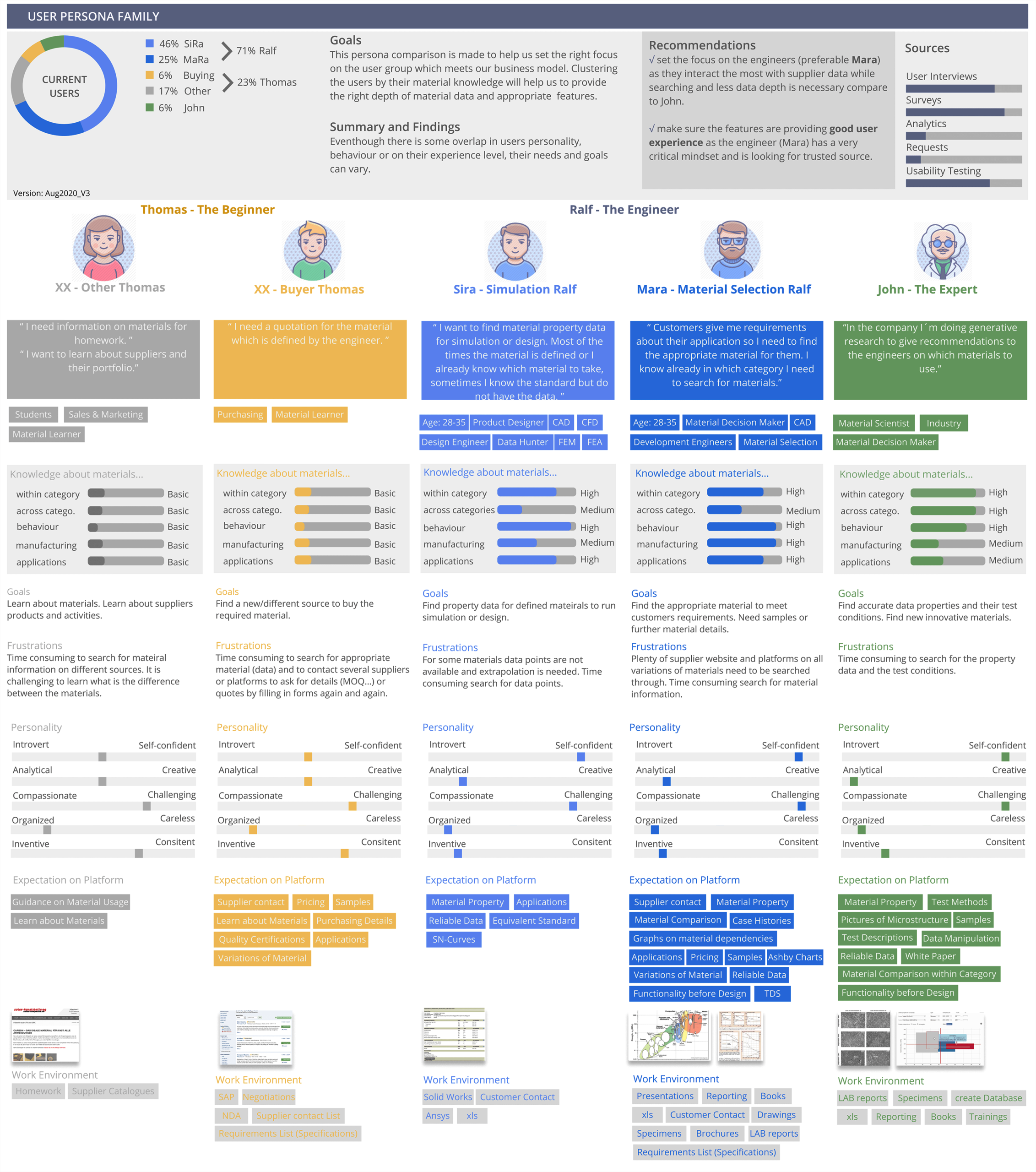
This growth also gave us the volume and quality of user interactions needed to formalize and refine our understanding of our audience.
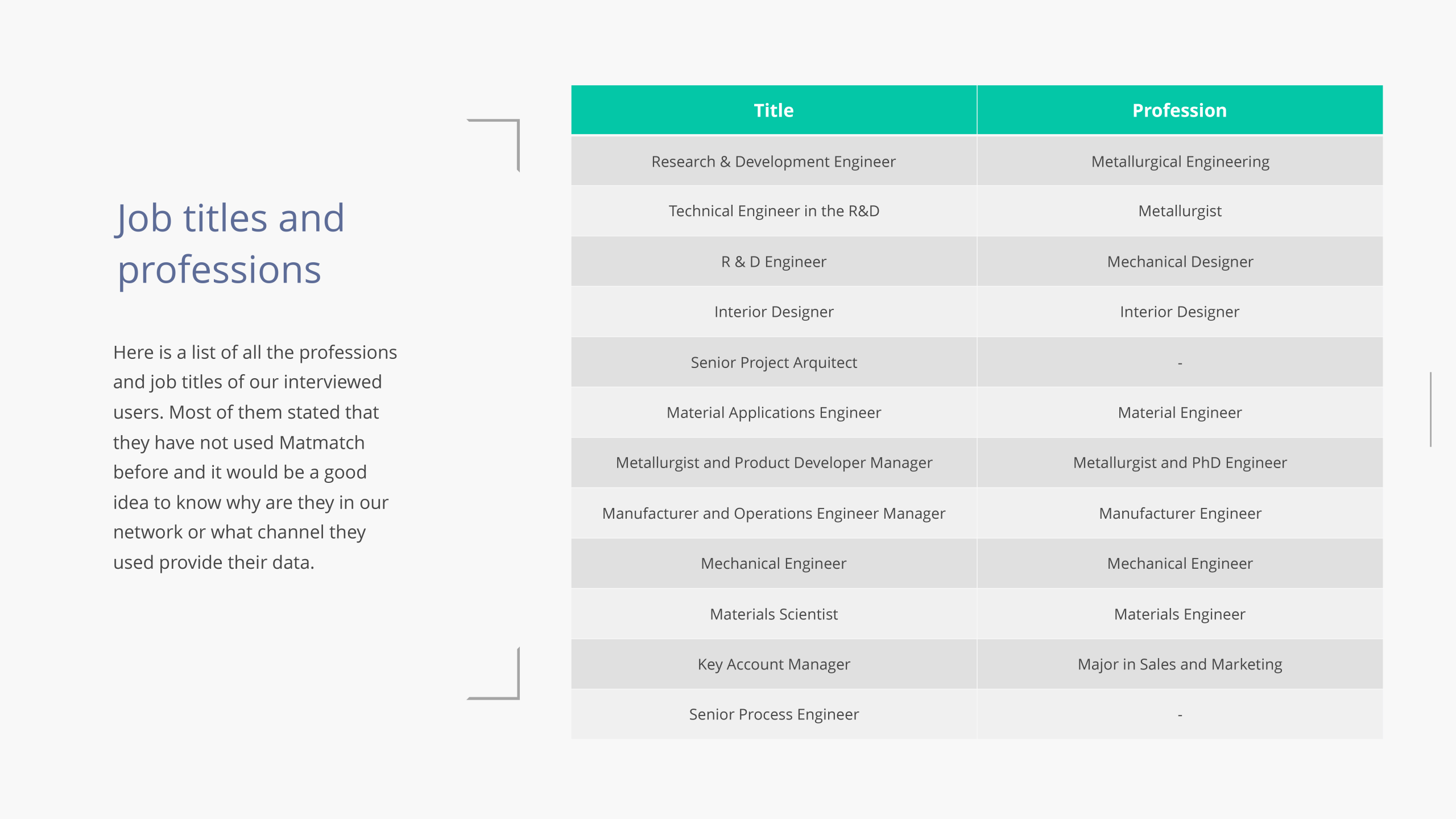
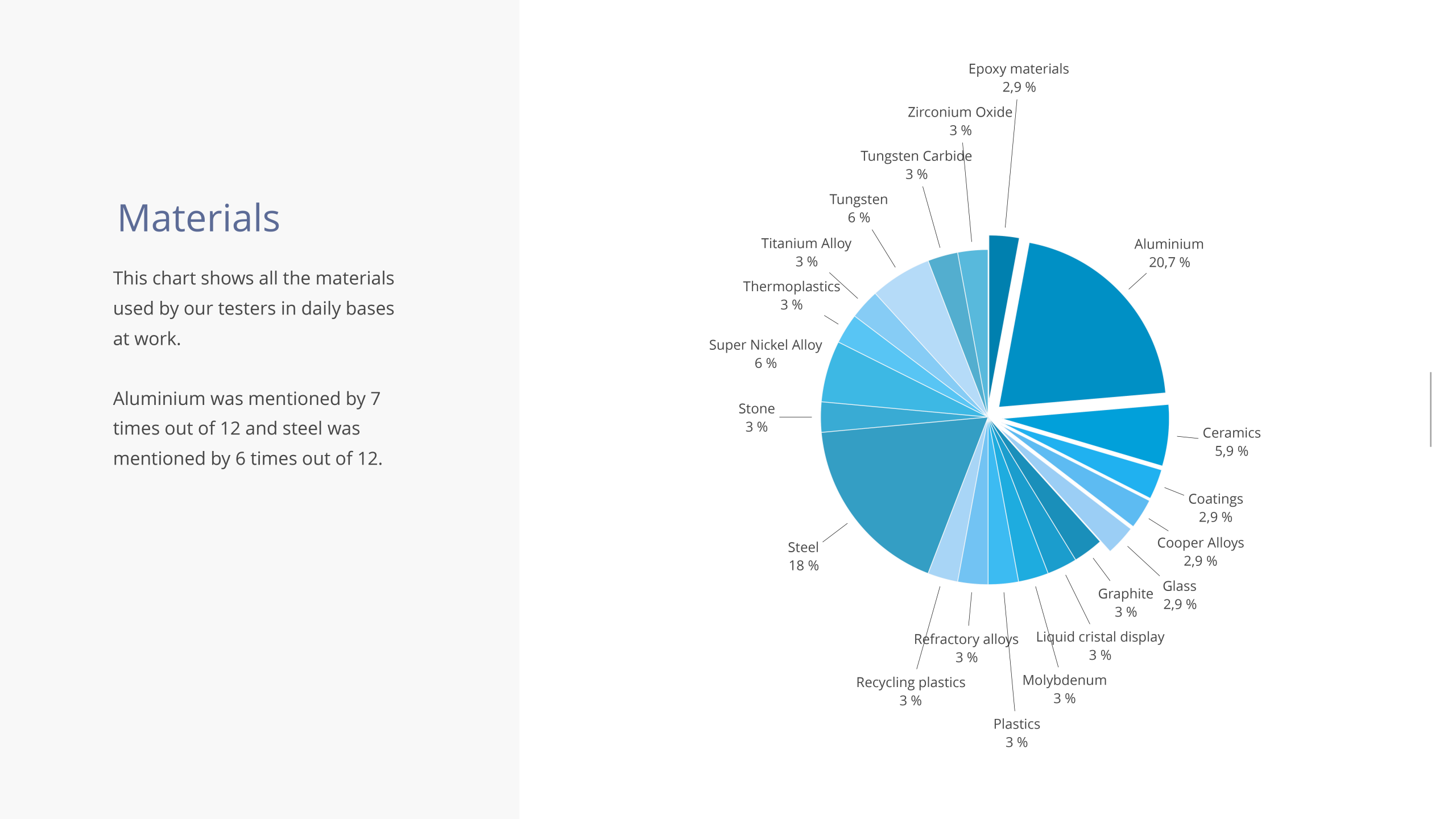
We were finally able to develop robust personas, journey maps, and empathy maps, moving from assumptions to data-driven insights that now guide every product decisio
Expanding Value and Market Impact
As the platform matured, the clearer information architecture and more intuitive workflows made Matmatch easier to trust.
Suppliers began re-engaging, drawn by higher-quality leads and stronger user engagement. Matmatch gradually evolved into a two-sided ecosystem, enabling the product team to explore new value opportunities for both users and suppliers.
Each iteration brought the platform closer to its original vision—a scalable, user-driven marketplace connecting engineers, designers, and material suppliers through shared value.
Learnings & Reflections
Being part of Matmatch’s transformation taught me that building a great product is not only about usability, design systems, or validated concepts—it’s about organizational readiness to adapt and evolve.
The exponential growth in user traffic revealed a critical insight: a large portion of our new audience consisted of researchers and students—segments that were highly engaged but outside the original target strategy. This shift presented a major business opportunity to rethink our model, expand into education and research partnerships, and leverage our data platform in new ways.
In retrospect, I learned that product success depends as much on organizational alignment and openness to change as it does on design or technology.
The materials and raw resources industry remains one of the most traditional and change-resistant fields, yet this experience reinforced my belief that even in rigid markets, user-centered innovation can reveal entirely new paths forward.
Matmatch may not have capitalized on that potential, but the journey strengthened my ability to bridge product strategy, design, and business goals—an experience that continues to shape how I lead product teams today.